
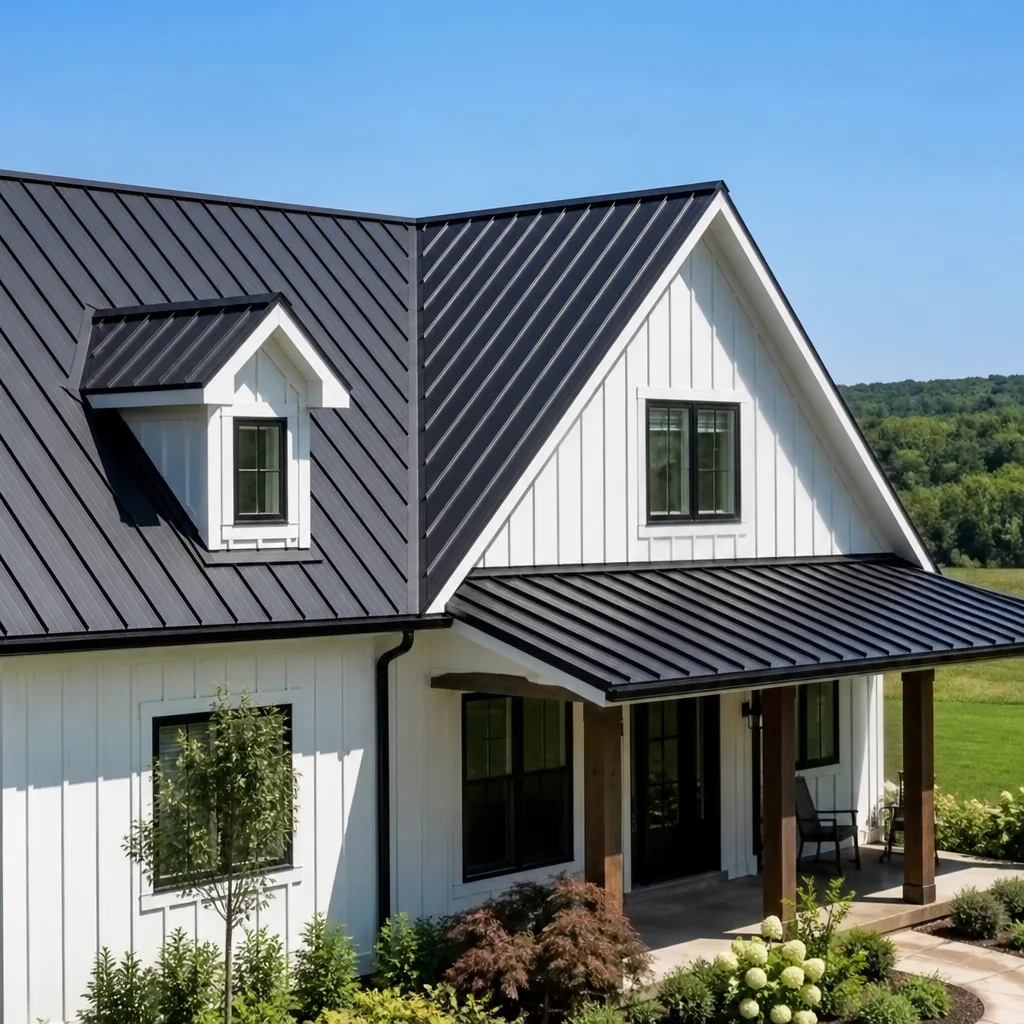
 Metal roofing
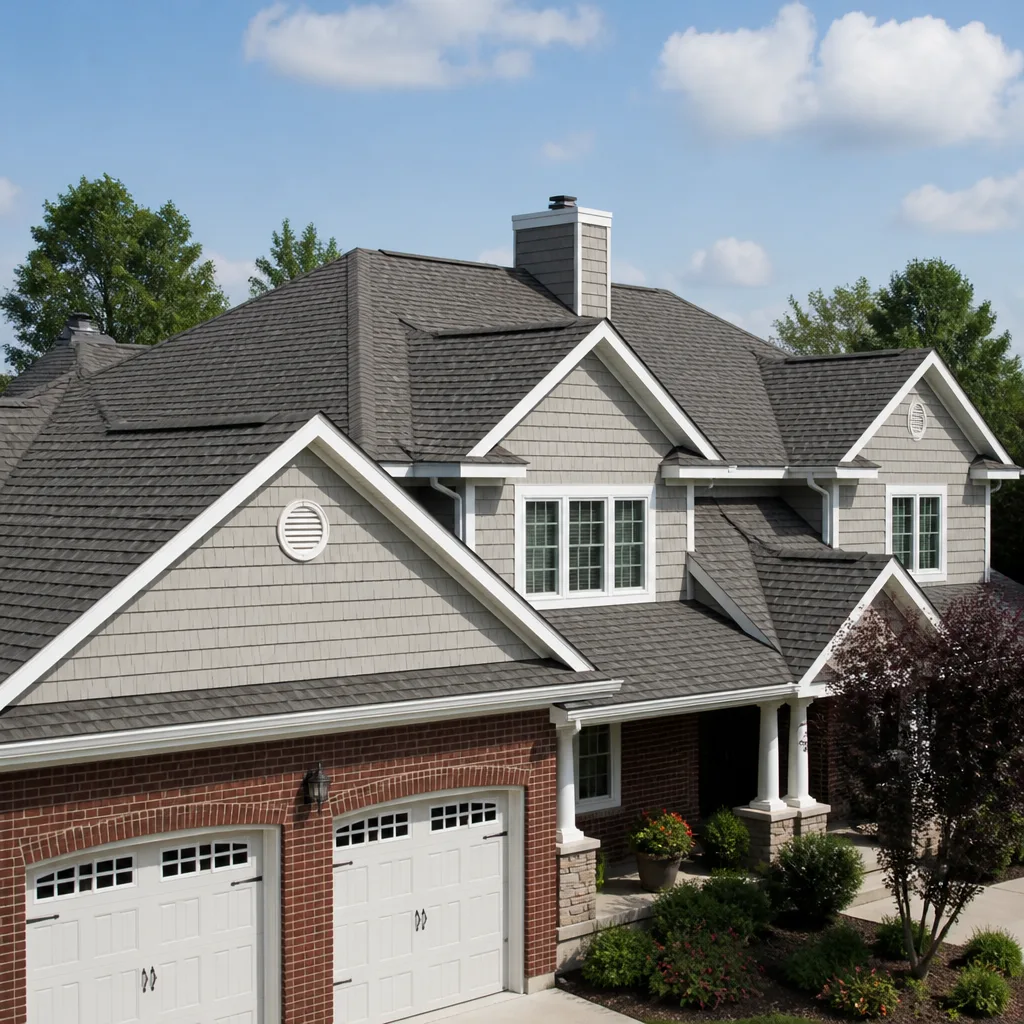 Architectural shingles
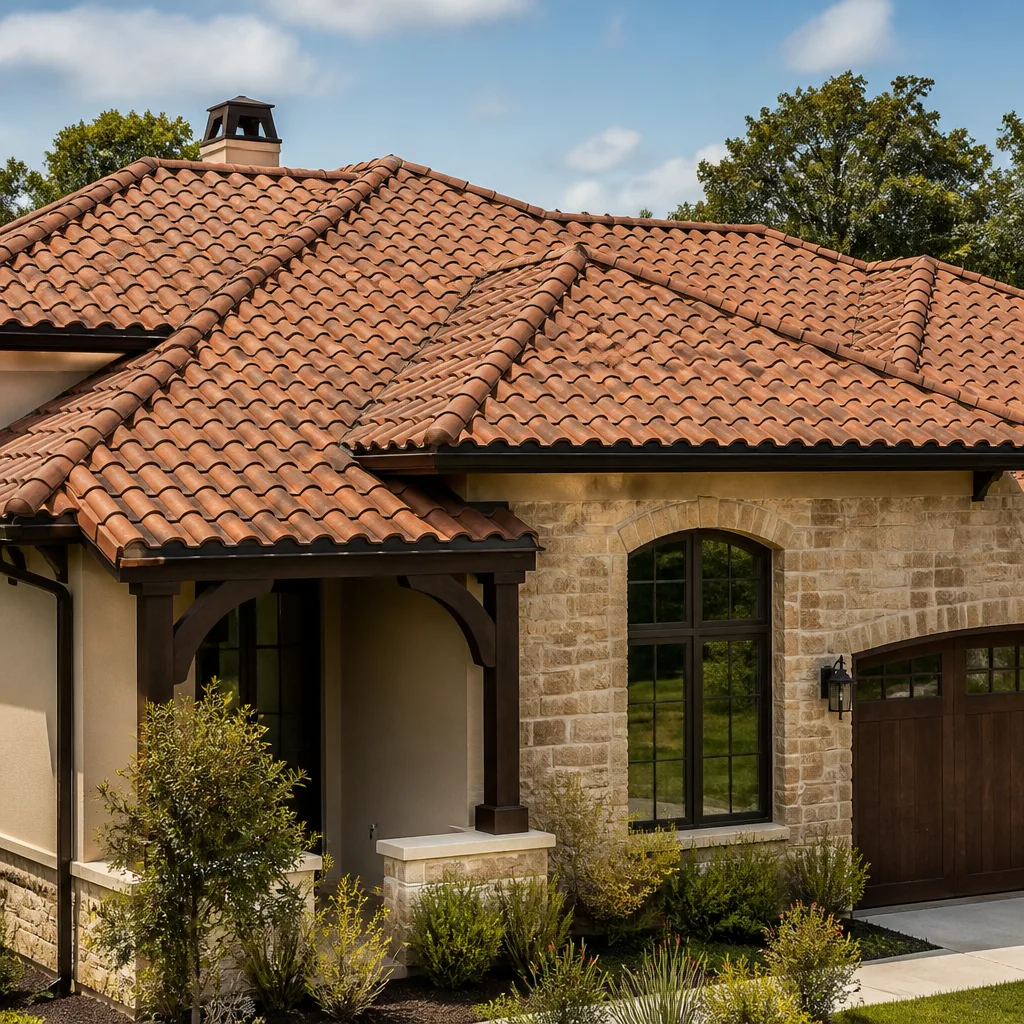 Tile roofing
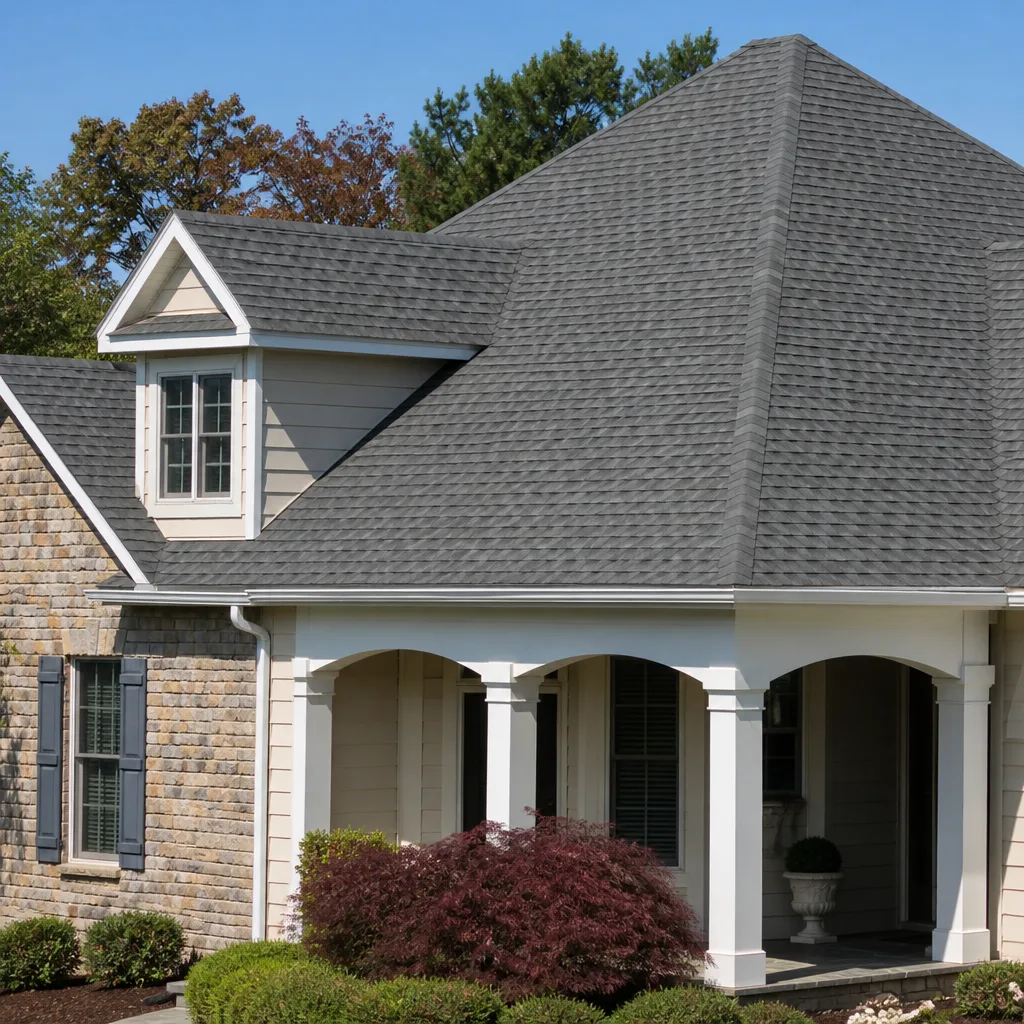 GAF
GAF Owens Corning
 Flat & low-slope
Free roof inspection with deck photos before we talk money - GAF and Owens Corning certified installation
Tamko Ridge Vent Installation: The Jacksonville Owner’s Guide
Tamko ridge vent installation in Jacksonville typically runs $320 to $680 installed on a standard single-family home, depending on roof length and access. We stock Tamko-compatible ridge vent on our trucks and can usually get the job done within 48 hours of your call. Most homeowners discover the problem after a storm: they notice shingle granules in the gutter, a damp spot on the ceiling near an exterior wall, or attic air that feels swampy even in February.
Here’s the thing about ridge vents in Florida: they work constantly, or they don’t work at all. A ridge vent is the exhaust half of your attic ventilation system. When it cracks, lifts, or the weatherproofing membrane degrades, hot air sits in your attic and starts working on your shingles from underneath. In Jacksonville’s seven-month heat season, that’s not a slow failure, it’s a compounding one. Travis Oakley has pulled ridge vents off Mandarin homes that looked fine from the ground and were paper-thin underneath, brittle from UV exposure and salt air.
We’re an independent roofing contractor in Jacksonville, not affiliated with Tamko. What that means for you: we’re not here to sell you a brand, we’re here to match the right vent to your existing roof and install it so it actually exhausts air. The price goes on paper before we start. If it’s not right, we’re not done.
Which Tamko Models This Applies To
Tamko’s ridge vent lineup is built around their shingle systems, and the compatibility question matters more than most contractors let on. The two primary product families are the Tamko Roll Vent and the Tamko Ridge Vent Shingle (sometimes branded as Ventilated Ridge Cap). Both install along the peak, but they mate differently.
The Roll Vent is a continuous flexible vent, roughly 36 feet per roll, designed to work with Tamko’s architectural shingle lines: Heritage, Heritage Premium, Heritage Vintage, and Elite Glass-Seal. The Ridge Vent Shingle is a rigid shingle-style cap that overlaps like standard ridge cap and pairs with the same lines plus Tamko’s rust-resistant metal ridge options.
The compatibility gotcha most crews miss: Tamko’s ridge vents are engineered for a minimum 4/12 roof pitch and a specific cut width along the peak, usually 2 inches of open slot on each side. Cut the slot too wide and you’re pulling rain in through the vent during a Northeast Florida afternoon storm. Too narrow and your attic stays hot enough to cook a turkey. We measure the slot and check the existing shingle profile before we quote, because putting a Tamko Roll Vent on a roof that originally had a different brand’s vent is fine, but only if the cut dimensions line up. We also check the age of the decking under the vent. A brittle 25-year-old plywood edge won’t hold a new vent line straight no matter which brand you buy.
On the OEM versus aftermarket question: for Tamko roofs, we recommend staying with Tamko-compatible venting. The profiles and adhesive strips are matched to their shingle thickness. Aftermarket universal vents can work, but on a 12/12 gable in Riverside or Avondale, the wrong profile catches wind differently and can start humming during afternoon storms. For the modest price difference, the matched part is the smarter play.
Styles & brands we work with
Signs Your Tamko Ridge Vent Installation Is Failing
- Attic heat that doesn’t drop at night. A working ridge vent lets hot air escape constantly. If your attic is still 20 degrees hotter than outside air at 10pm in October, the exhaust path is blocked or the vent has collapsed. We see this all the time on 2000s-era homes in Mandarin: the vent looked installed, but the slot underneath was cut wrong and never actually vented anything.
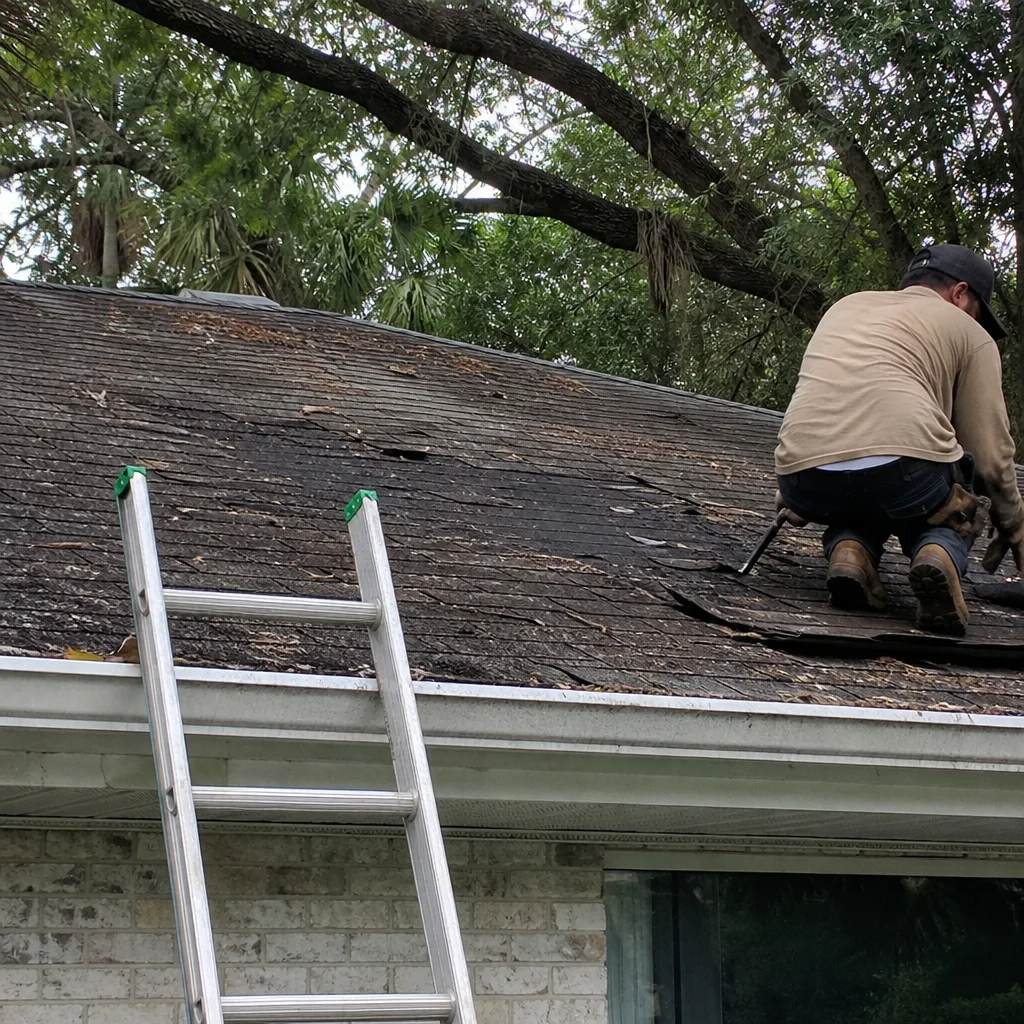
- Curling shingles near the peak, not at the eaves. Curled shingle edges concentrated within 3 feet of the ridge line mean trapped heat at the top of the house. That’s the ridge vent failing to do its job, and in Jacksonville that trapped heat bakes the shingle adhesive loose within a few summers.
- Granules piling up in gutters under the ridge line. A lifted or cracked ridge vent lets wind-driven rain get under the shingles along the peak. The shingles erode faster, and the granules wash out. This is the one you can spot from the ground before water ever shows up inside.
- Daylight visible through the vent from inside the attic. This is the straightforward one. On a bright day, go into your attic and look up at the peak. If light passes through gaps, cracks, or breaks in the vent material, the vent is physically failed. Light means rain can get in, and in Jacksonville rain gets driven sideways at 40mph several times a year.
- A damp musty smell that hangs around after storms. Small amounts of rainwater entering at the ridge don’t always show as a ceiling stain. They soak into the insulation, dry slowly in a poorly vented attic, and leave that specific mildew smell. If it’s worse after a big blow out of the east, the vent is the prime suspect.
See the difference
 Before
 After
After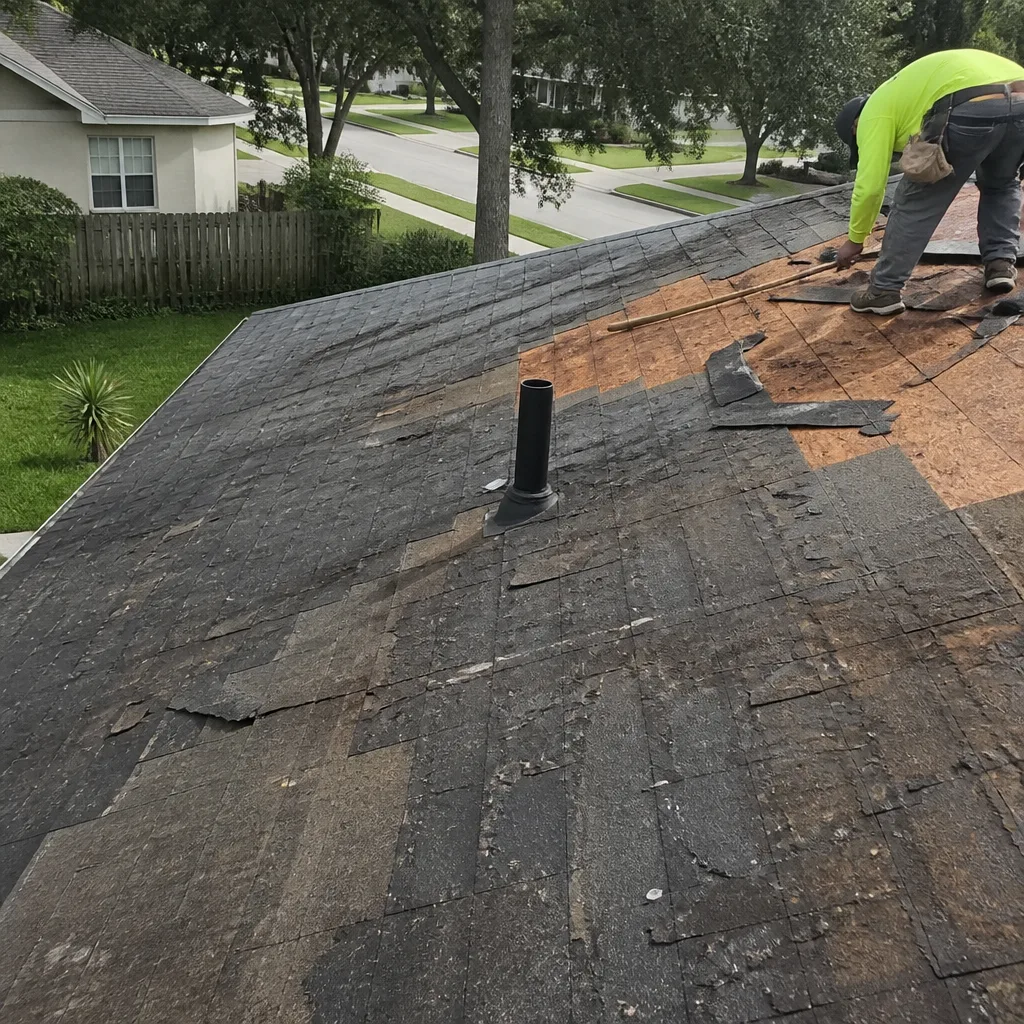 Before
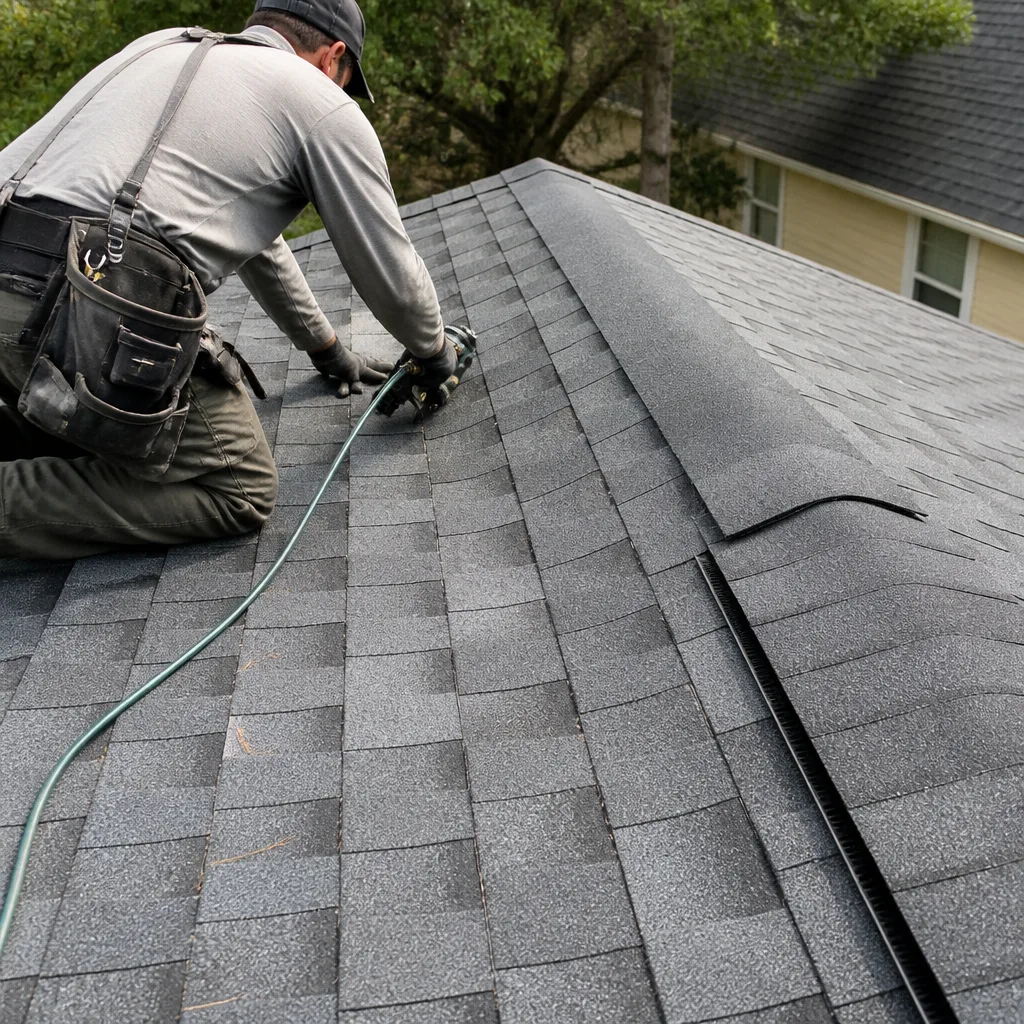 After
After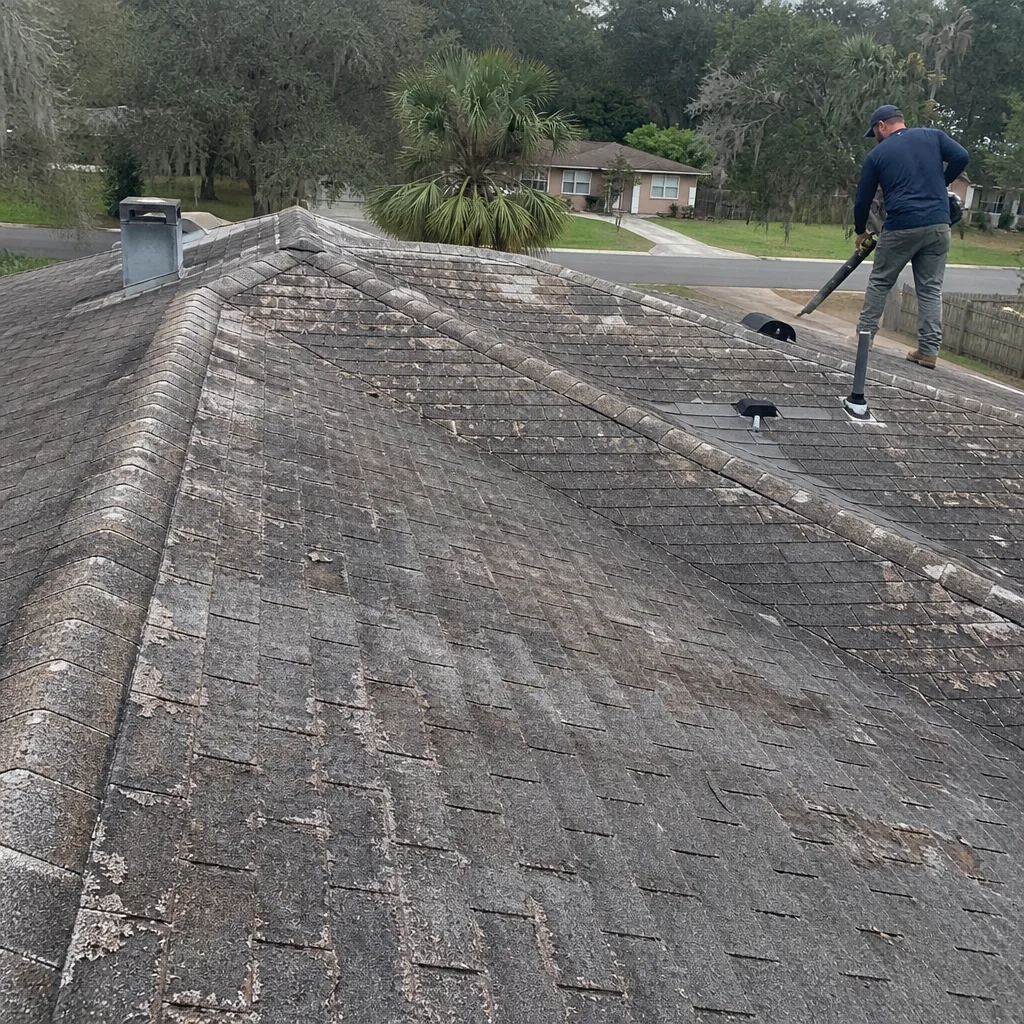 Before
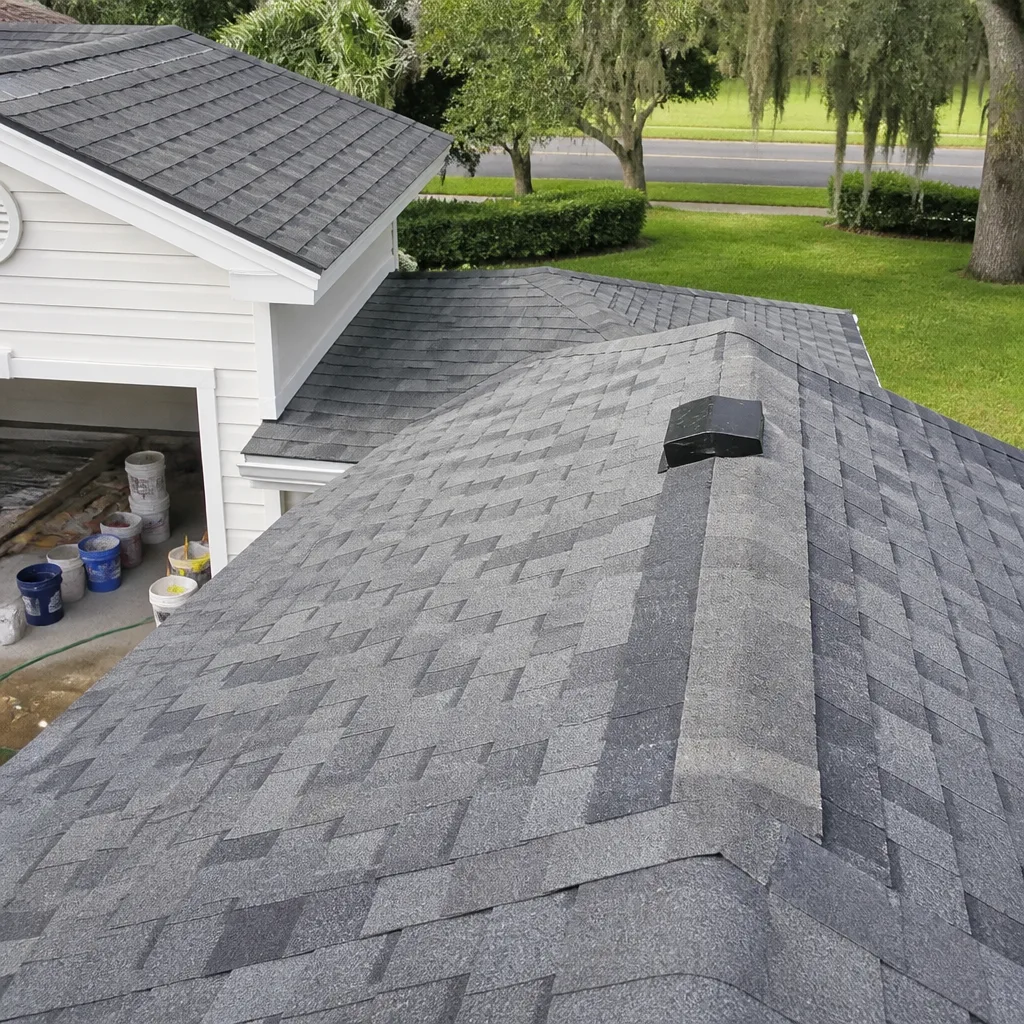 After
AfterReplacement Cost & What’s Included
Here’s the straight pricing for Jacksonville, no “call for a quote” runaround. We give this range because material cost varies by roof length and the condition of the existing decking at the peak.
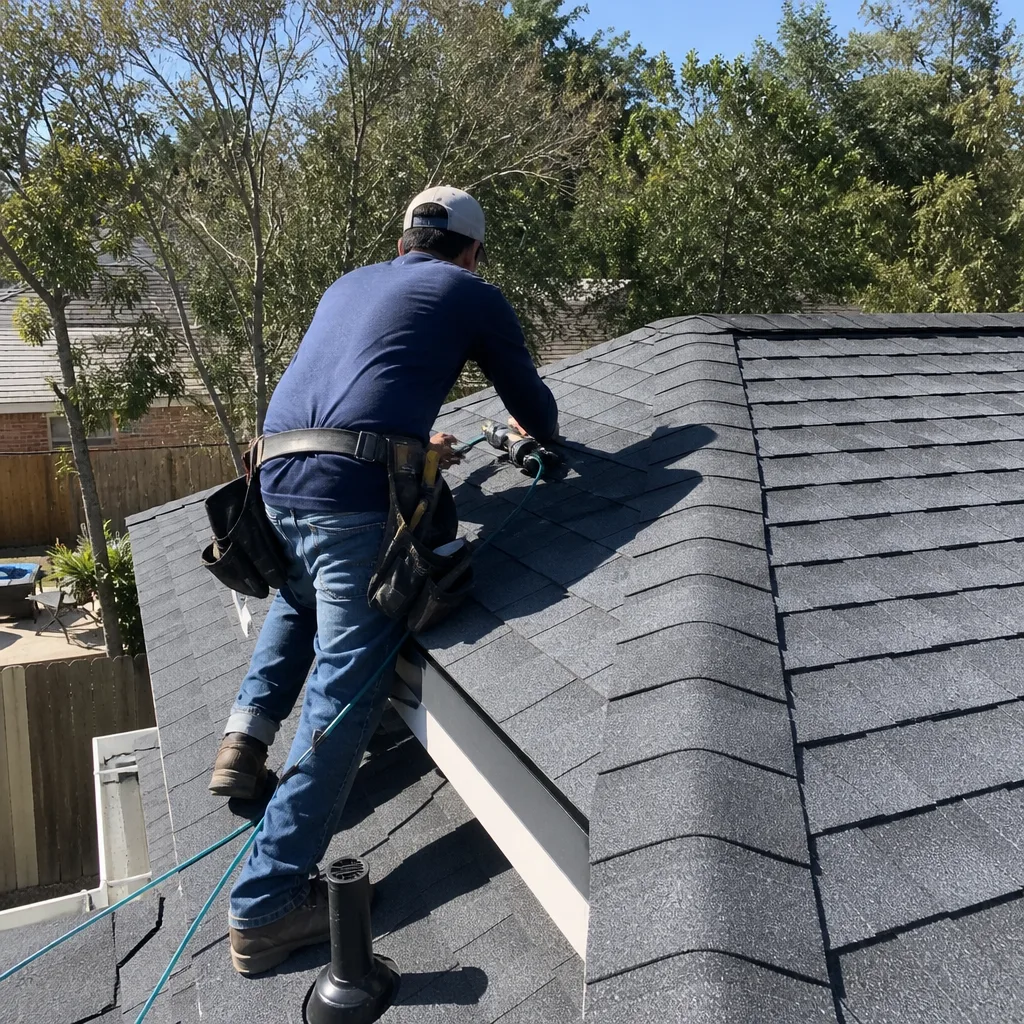
- Standard tamko ridge vent replacement (single-story, under 60 linear feet of peak): $320 to $480 installed. Includes tearing off the old vent and ridge shingles, cutting and cleaning the slot, installing new Tamko-compatible vent, and closing with new ridge cap shingles matching your existing color.
- Longer peaks or two-story walkable roofs (60 to 120 linear feet): $480 to $680 installed. More material, more time on the roof, more flashing transitions if hips intersect the ridge.
- Add-ons that move the number: new drip edge at the peak if the old edge is rusted through ($3 to $6 per linear foot), rotted decking replacement corners ($4 to $7 per square foot when we expose it), and re-sealing any end caps or hip transitions.
The writing is the price. Before any work starts, you get a line-item number on paper. That number does not move at the door. Our labor and the installed vent are covered by the 365-Day Done Right Promise: a written guarantee for one full year, and if the vent or the installation fails in that period, we return and fix it at no charge.
Key takeaways: Expect $320 to $680 on almost any Jacksonville home, the quote is free, and the price never changes once you approve it.
DIY or Call Us?
Let’s be honest about this part. A ridge vent replacement is not a steep-roof fall hazard, but it is a water-management job, and the failure mode is quiet. You can safely do two things yourself: first, open the attic on a bright day and look for daylight gaps along the peak. Second, walk the perimeter and check the gutters for a heavy concentration of granules under the ridge line. Both cost you nothing and tell us a lot when you call.
What we don’t recommend is getting on the roof and swapping the vent yourself. The reasons are specific: matching ridge shingle color requires knowing which line your shingles came from and where to source that exact color from a Jacksonville supplier, cutting the ridge slot to spec is a skill that comes from doing it, and getting the adhesive strips on a Tamko Roll Vent to seat properly in Florida heat takes some practice. A bad seam along the peak doesn’t leak the first week. It leaks during the first big storm, months later, when the roof is already wet and you’re the one trying to find the source. A lot of the repairs we quote in Jacksonville start with someone else’s honest attempt that needed a second trip anyway.
If you’re on the fence, call (904) 719-6346 and talk to a live person. Tell us what you saw in the attic or in the gutters. We’ll give you a straight answer on whether a replacement is actually warranted, and if it is, the quote won’t cost you anything.
FAQs
A properly installed Tamko ridge vent typically lasts 12 to 18 years in Northeast Florida, with 14 being realistic, because UV exposure, heat cycling, and salt air from the coast shorten the lifespan compared to northern climates. The shingle cap around it often fails visually first, which is why we inspect the cap and the vent together before deciding what gets replaced.
In most Jacksonville cases, partial repair works for the shingle cap only, not the vent itself: once the vent membrane cracks, lifts, or separates at the seams, patching it is a temporary fix that fails within a year. We’ll tell you plainly if a repair is worthwhile on your specific roof, and the free estimate will show both numbers so you decide with the math in front of you.
A straightforward ridge vent replacement on a typical Jacksonville home takes one working day, usually 4 to 6 hours, including old vent removal, decking inspection, new vent installation, and ridge cap closing. If we find rotted decking that needs replacing, add a few hours and the price of the wood to the written quote before we touch it.
Yes, our trucks carry Tamko-compatible Roll Vent and ridge cap in the colors that match the majority of Jacksonville roofs, along with the matching Tamko, GAF, Owens Corning, and CertainTeed vent profiles for older homes with mixed shingle lines. If your color or profile isn’t onboard, we source it from a local Jacksonville supplier, usually same day or next day.
No, the price we put in writing before any work begins is the price you pay when we finish, and the only exception is if we expose hidden structural damage at the peak that nobody could see from the outside, in which case we stop, show you the damage, and get your approval in writing before adding anything. Call (904) 719-6346 for a free estimate and a written price. You’ll have the number before anyone climbs a ladder.
Written by Travis Oakley, Owner, Brennan Roofing Co Jacksonville at Brennan Roofing Co Jacksonville, serving Jacksonville and nearby areas.