
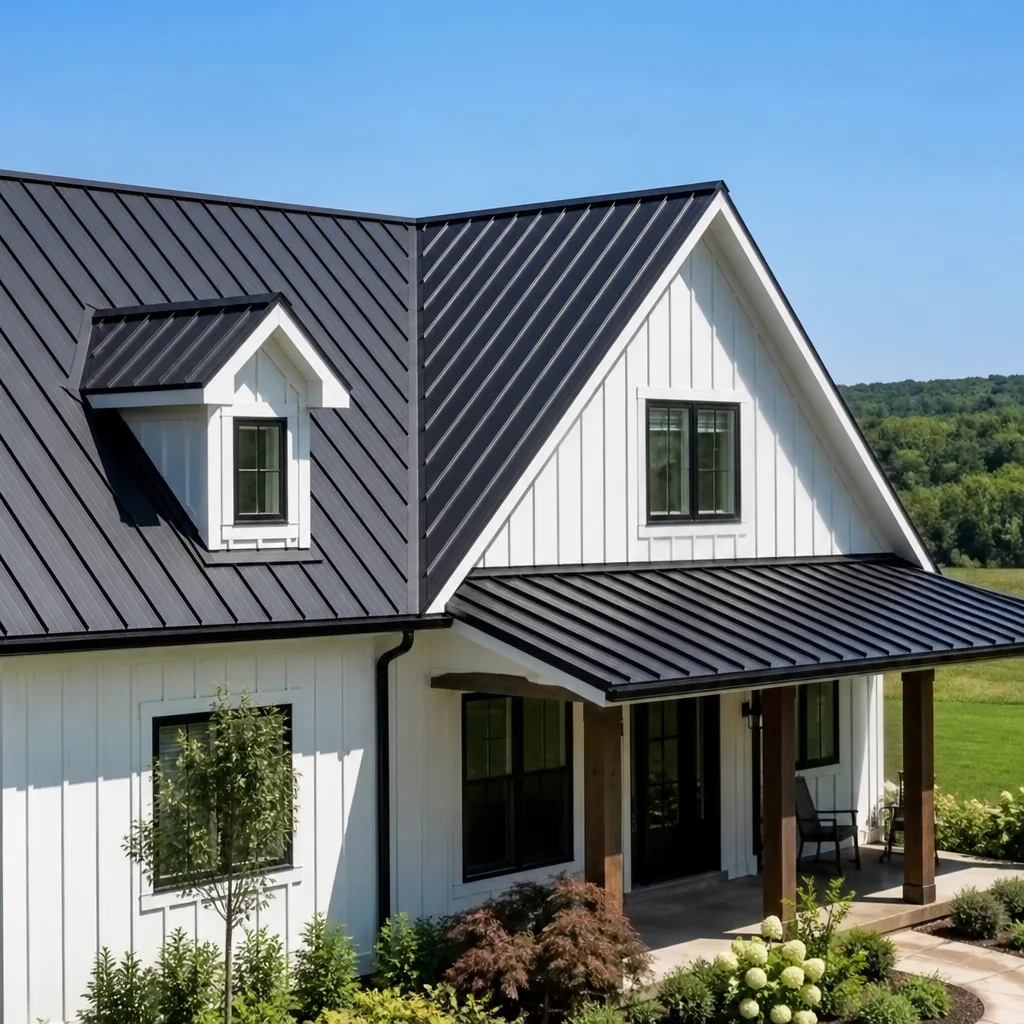
 Metal roofing
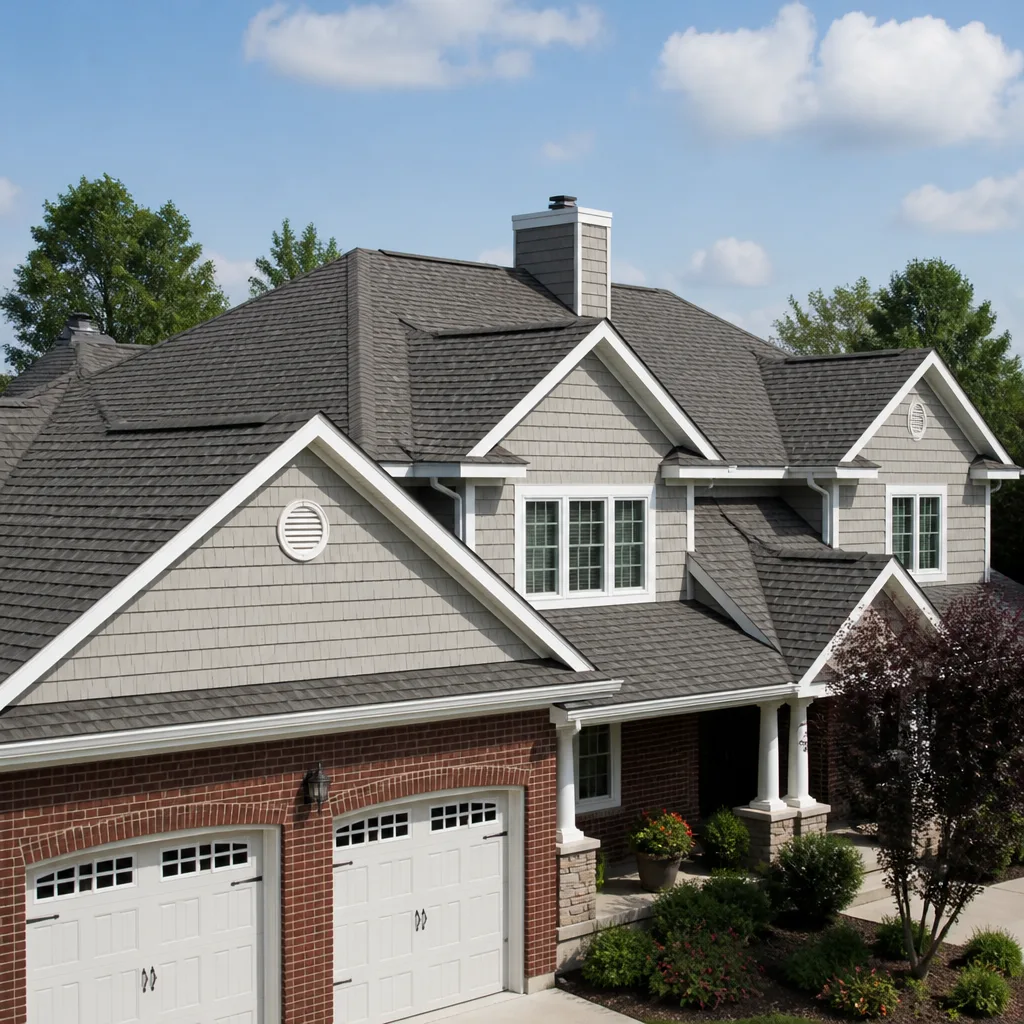 Architectural shingles
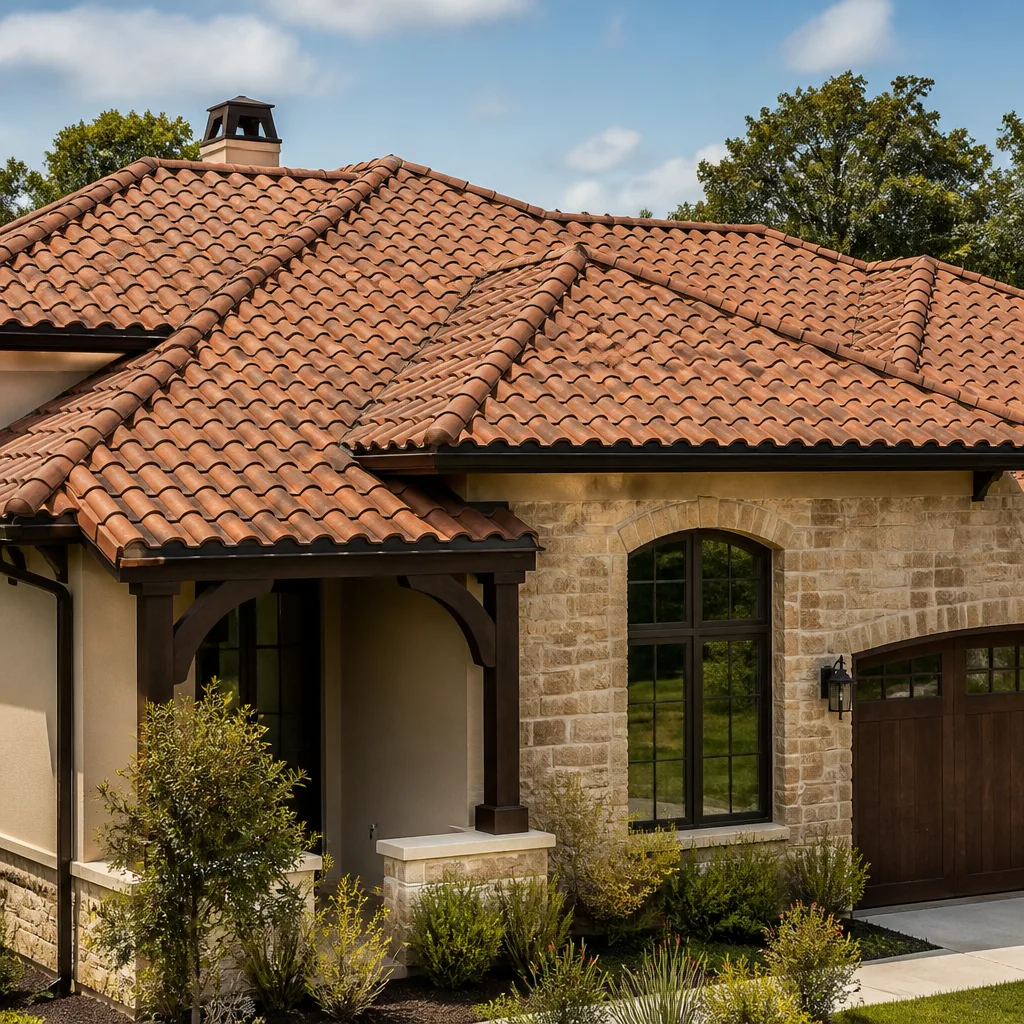 Tile roofing
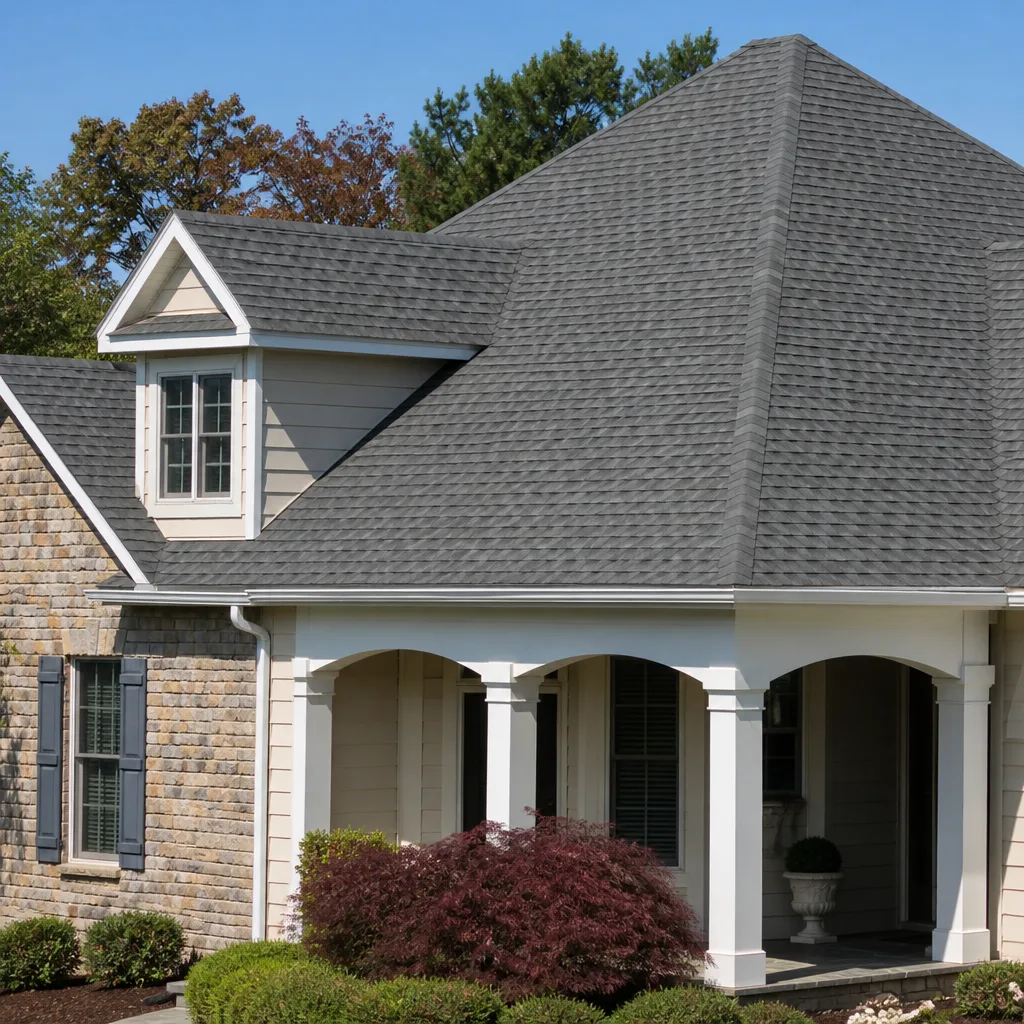 GAF
GAF Owens Corning
 Flat & low-slope
Free roof inspection with deck photos before we talk money - GAF and Owens Corning certified installation
IKO Ridge Vent Installation: The Jacksonville Owner’s Guide
IKO ridge vent installation in Jacksonville typically runs $850 to $1,600 installed on an average single-family home, and we stock IKO-compatible ridge vent and matching accessories on our trucks. Most homeowners discover theirs has failed when they notice shingle granules collecting in the gutter near the peak, or when the attic temperature climbs noticeably in July and August. Call (904) 719-6346 for a written quote before any work starts.
A ridge vent is the exhaust half of your attic ventilation system, and here in Jacksonville it works harder than most people realize. Our climate pushes attic temperatures past 140°F in summer, which means a ridge vent that isn’t moving air is cooking your shingles from underneath. We’ve pulled failed IKO ridge vents off homes in Mandarin, San Marco, and Arlington, and the story is usually the same: cracked plastic baffles, matted filter material, or installation that never matched the IKO profile in the first place.
Travis Oakley will tell you the same thing he tells every homeowner who calls about ridge vent: IKO makes a solid product, but it only performs if it’s matched to the right shingle line and cut to the right slot width. We’re an independent Jacksonville roofing company, not affiliated with IKO, which means we can be straight about what works and what doesn’t without a sales pitch attached.
Which IKO Models This Applies To
The IKO ridge vent line that shows up on Jacksonville homes is almost always the IKO Pro 4 or the IKO Armourvent Multi-Flex. Both are roll-form plastic vents with a low-profile design that sits under the cap shingles, but they are not interchangeable, and that’s the compatibility gotcha that causes most repeat failures. The Pro 4 is a 4-foot rigid panel with a 12.5-inch width and a molded internal baffle. The Armourvent Multi-Flex is a 20-foot roll with a flexible hinge down the center, designed for roofs with a pitch between 3/12 and 16/12. If a contractor puts Pro 4 on a steep-pitch roof or uses Multi-Flex where a rigid panel belongs, the vent doesn’t seat flat, water gets behind it at the ends, and the attic ventilation drops to near zero.
To identify what you have before you call, look at the ridge cap. If the cap shingles have a slightly rounded, uniform hump running the full length of the peak, you likely have a roll-form vent. If the peak looks segmented with flat sections between cap shingle tabs, it’s probably a rigid panel. You can also check the attic side: IKO stamps their vent products with the name and date code on the underside flange every few feet.
On the OEM versus aftermarket question, our position is practical. IKO OEM ridge vent is what we recommend when the roof still has IKO shingles with years of life left. The vent profile matches the shingle exposure and the cap nail lines line up correctly. Quality aftermarket equivalents from GAF, Owens Corning, and CertainTeed can work fine, but only if the installer verifies the vent width against the existing slot cut and the nail line spacing. We stock IKO-compatible ridge vent on our trucks along with compatible nails, end caps, and connector pieces, so most installations don’t wait on a parts order.
Styles & brands we work with
Signs Your IKO Ridge Vent Installation Is Failing
You don’t usually see a failed ridge vent from the ground. You feel it, or you find the evidence underneath. Here are the five symptoms we see most often on Jacksonville homes, and what each one tells us:
- Attic heat that doesn’t drop after sunset. If your attic is still 110°F at 10 p.m. in August, the exhaust side isn’t pulling. The baffle inside the vent may be matted with dust, or the vent was undersized for the attic square footage from day one.
- Shingle granule buildup at the roof peak only. Granules everywhere in the gutter mean normal wear. Granules concentrated directly below the ridge vent mean the vent is moving too much moisture and the cap shingles are aging faster than the rest of the roof.
- Water staining on the attic floor or ceiling joists near the peak. This almost always traces to a vent end cap that cracked, or a vent section that lifted at the seam. Wind-driven rain in Jacksonville gets sideways in the summer storms, and an open seam at the ridge is a direct path for it.
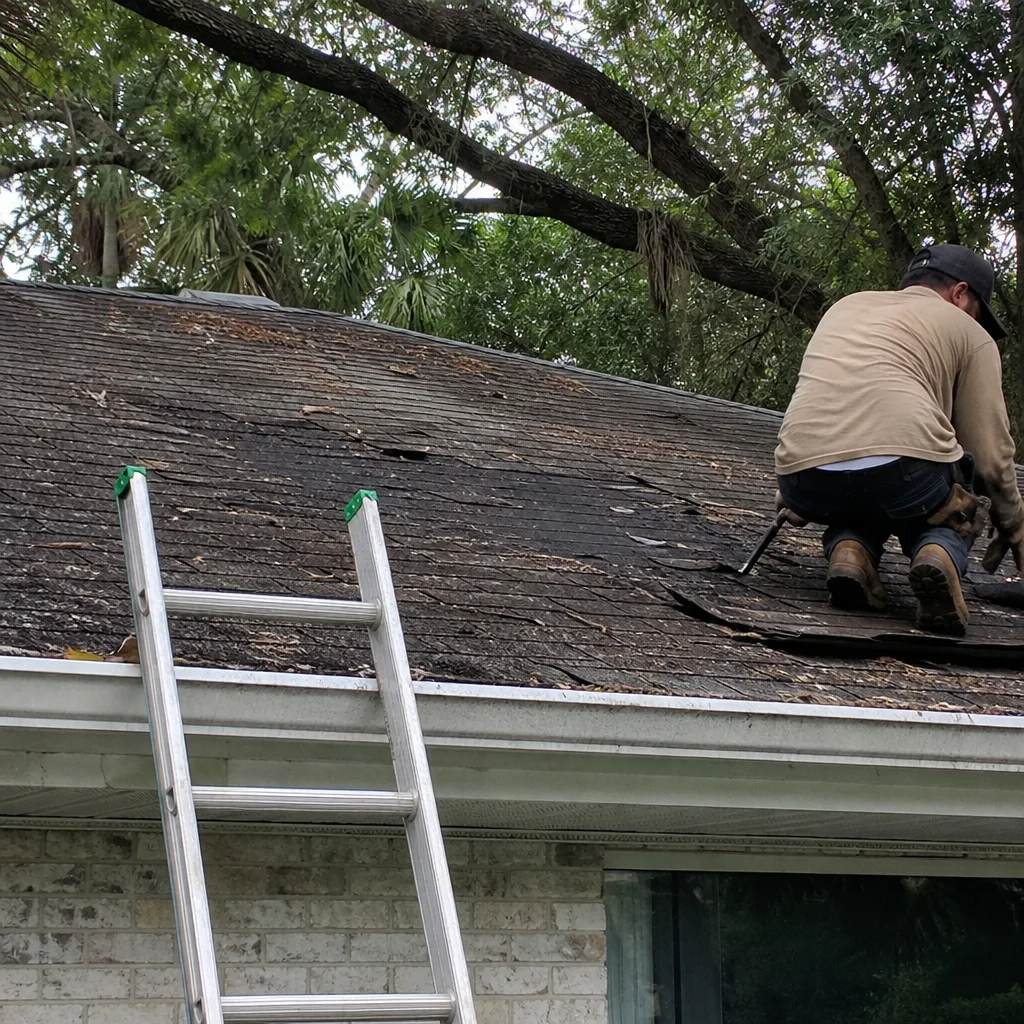
- A visible gap between the vent and the shingle deck when you look closely at the ridge. The vent should sit flat with no daylight underneath the flange. Warped plastic from heat cycling is common on IKO vents older than eight or nine years in Florida sun.
- You hear a rattle or flutter from the ridge on windy days. That’s plastic baffle material vibrating inside the vent, which means the internal structure has cracked and a piece is loose. It’s not dangerous, but it’s not venting anymore either.
See the difference
 Before
 After
After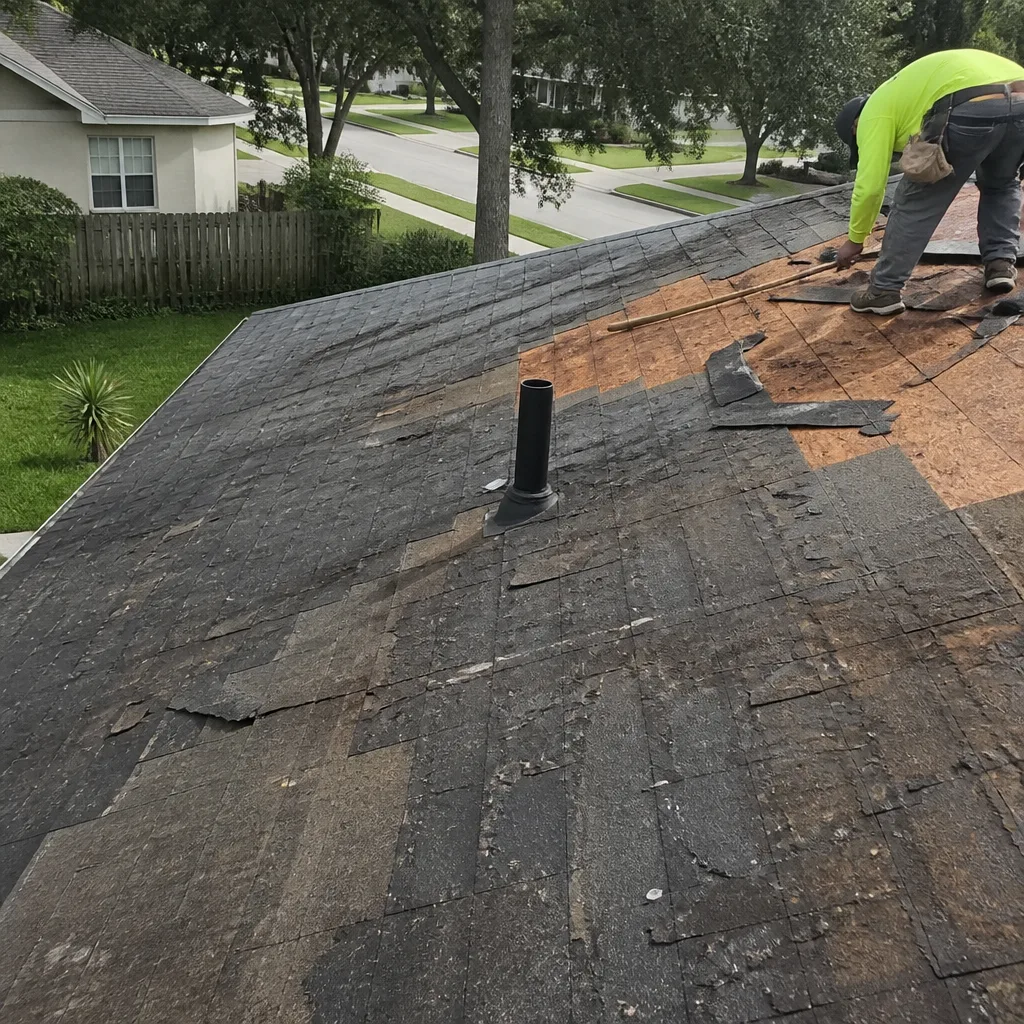 Before
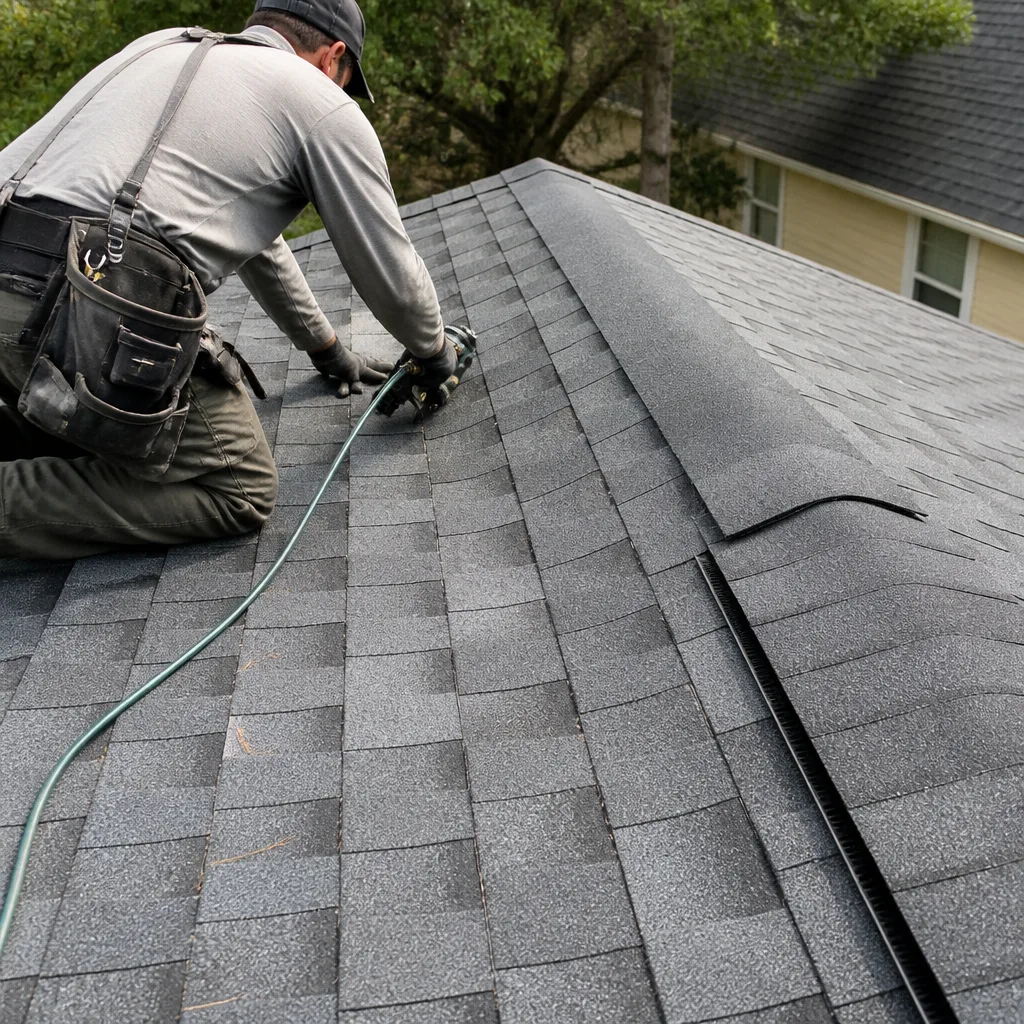 After
After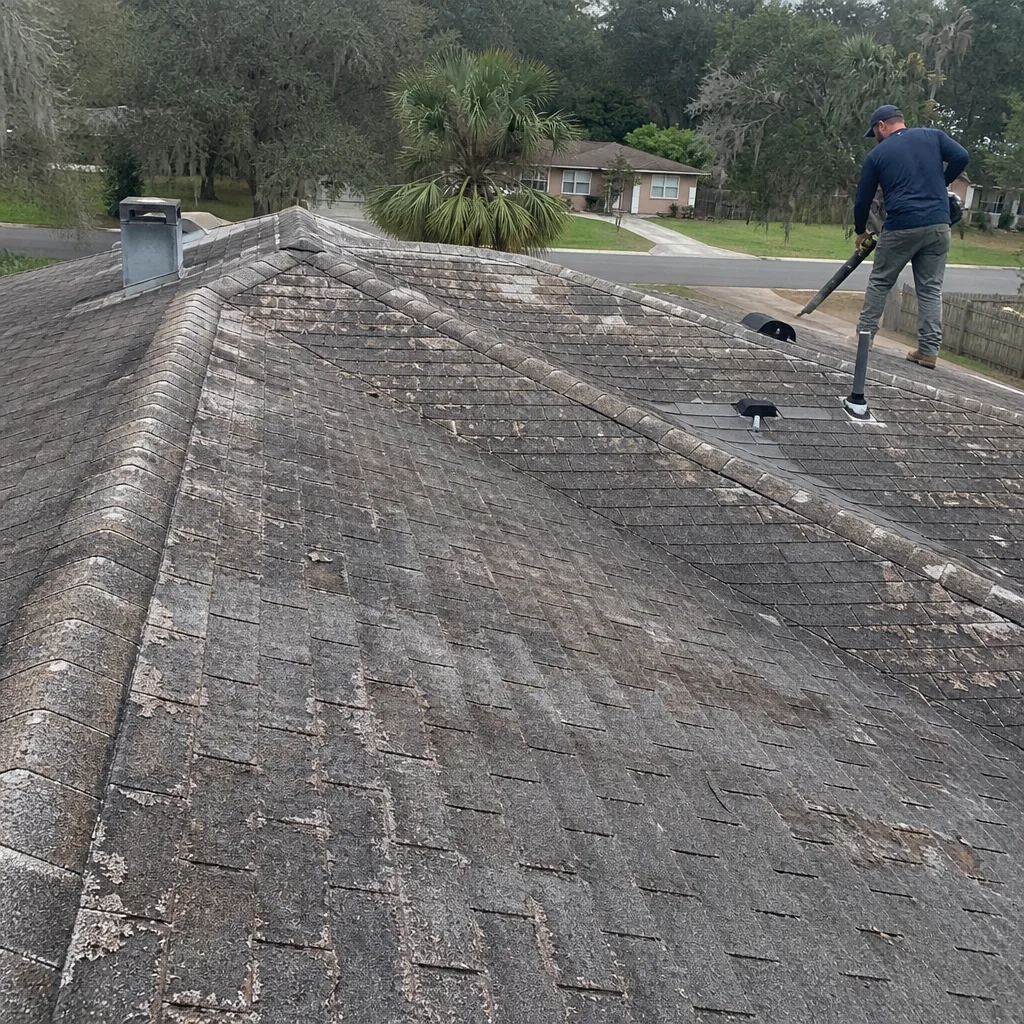 Before
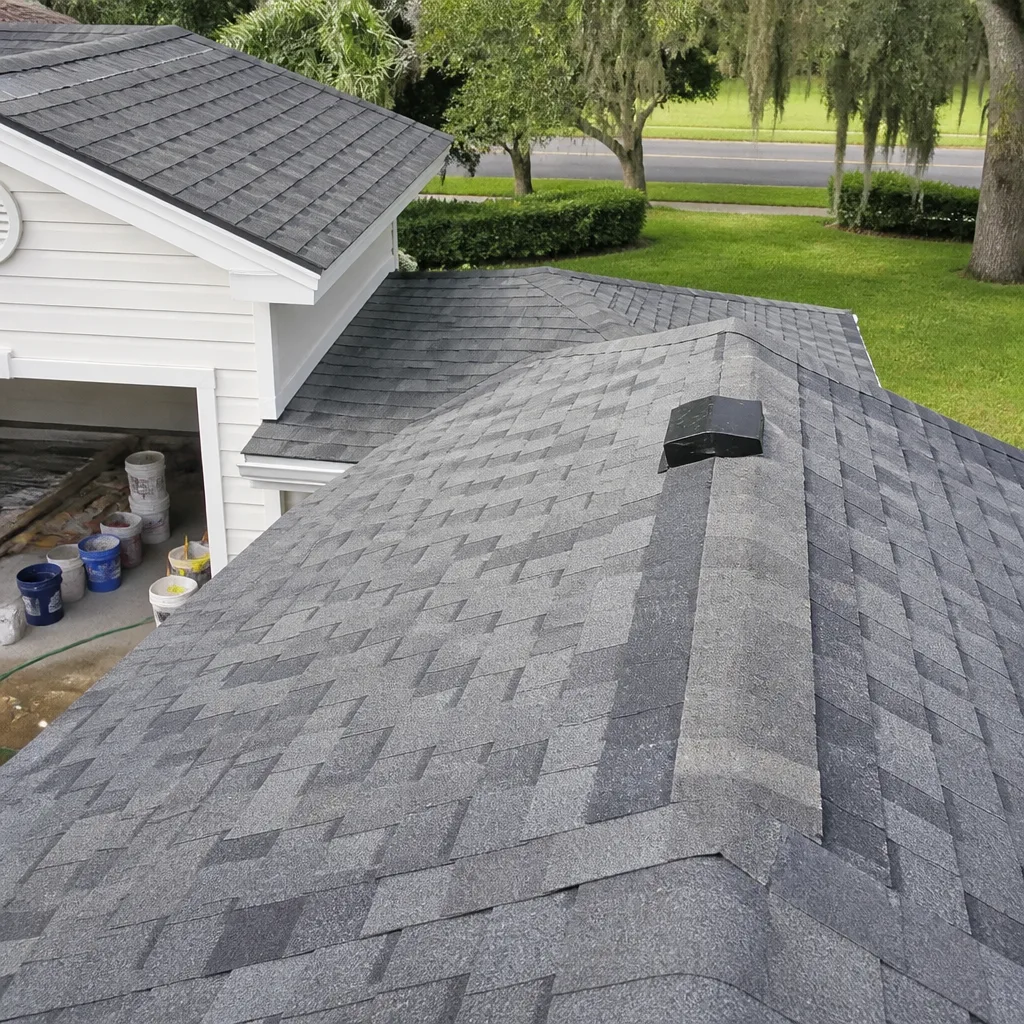 After
AfterReplacement Cost & What’s Included
For a typical Jacksonville single-story home with 30 to 50 linear feet of ridge, IKO ridge vent replacement runs $850 to $1,600 installed. The range depends on three things: how much existing vent has to come out, whether the slot cut in the roof deck needs correction, and how many cap shingles we replace to get a clean seam at the ridge.
Here’s the line-item breakdown so you can see where the money goes:
- IKO-compatible ridge vent material: $4.50 to $7.00 per linear foot, depending on the series
- Labor to remove old vent and cap shingles: $250 to $450 on most homes
- Labor to install new vent, caps, end caps, and sealant: $350 to $650
- New cap shingles where removal damaged the old ones: $75 to $200
- Correction of an improperly cut slot, if needed: $100 to $300
Every Brennan Roofing job gets a written price before any work starts. The number goes on paper, you sign it, and that’s the number. No change orders built into the process, no “we found something” conversation at the door. The installation itself carries our 365-Day Done Right Promise: if something fails within one year, we come back and fix it free, in writing, no charge. Call (904) 719-6346 for an exact quote on your ridge line.
| Scope | Jacksonville Installed Range | What’s Included |
|---|---|---|
| Basic replacement, 30 linear feet | $850 – $1,050 | Vent, end caps, nails, sealant, standard cap shingle matching |
| Standard replacement, 30-50 linear feet | $1,000 – $1,300 | Everything in basic, plus removal and disposal of old vent |
| Full replacement with slot correction | $1,300 – $1,600 | Everything in standard, plus fixing an undersized or off-center slot |
We don’t charge extra for an attic inspection while we’re up there. If the ridge vent failed because the intake side is blocked, we’ll tell you and put a number on fixing that too, separately, so you can decide.
DIY or Call Us?
Walking a ridge line and pulling cap shingles is not the place to learn roofing. A fall from the peak of a Jacksonville ranch is still a ten-foot drop onto a hard surface, and the ridge is where gravity works against you the hardest on a pitched roof. We say this plainly because we’ve seen the results of well-intentioned DIY repairs that went sideways.
What you can safely do from the ground or from inside the attic: check for visible daylight gaps under the ridge vent, note any water stains near the peak, measure your attic temperature with a simple thermometer, and confirm whether your soffit vents are clear. That information helps us quote the job faster and tells us whether the problem is the vent itself or the ventilation system as a whole.
What you shouldn’t do is pull the cap shingles to inspect the vent yourself. Once the cap shingles come up, they need to go back down with the right nails in the right pattern, and a nail in the wrong spot through the vent channel is exactly how ridge vents start leaking in the first place. If it’s not right, we’re not done. Call (904) 719-6346 and we’ll handle the whole thing from the ground inspection to the finished cap line.
FAQs
Plan on 10 to 15 years in northeast Florida, which is shorter than the 20-plus year lifespan IKO vents can reach in drier climates. UV exposure and heat cycling break down the plastic structure over time, and the constant humidity accelerates the filter material degradation. If your shingles are IKO and still within their service life, the vent may need one mid-life replacement before the roof itself comes due.
Small repairs make sense when one end cap is cracked or a single seam has lifted, and we’ll do that for the cost of the service call plus the part. If the vent body itself shows cracking, warping, or matted baffles across multiple sections, replacement is the right call because a patch job leaves the rest of the vent failing on a timeline you can’t predict. Call (904) 719-6346 and we’ll tell you which one you’re looking at, based on what we find.
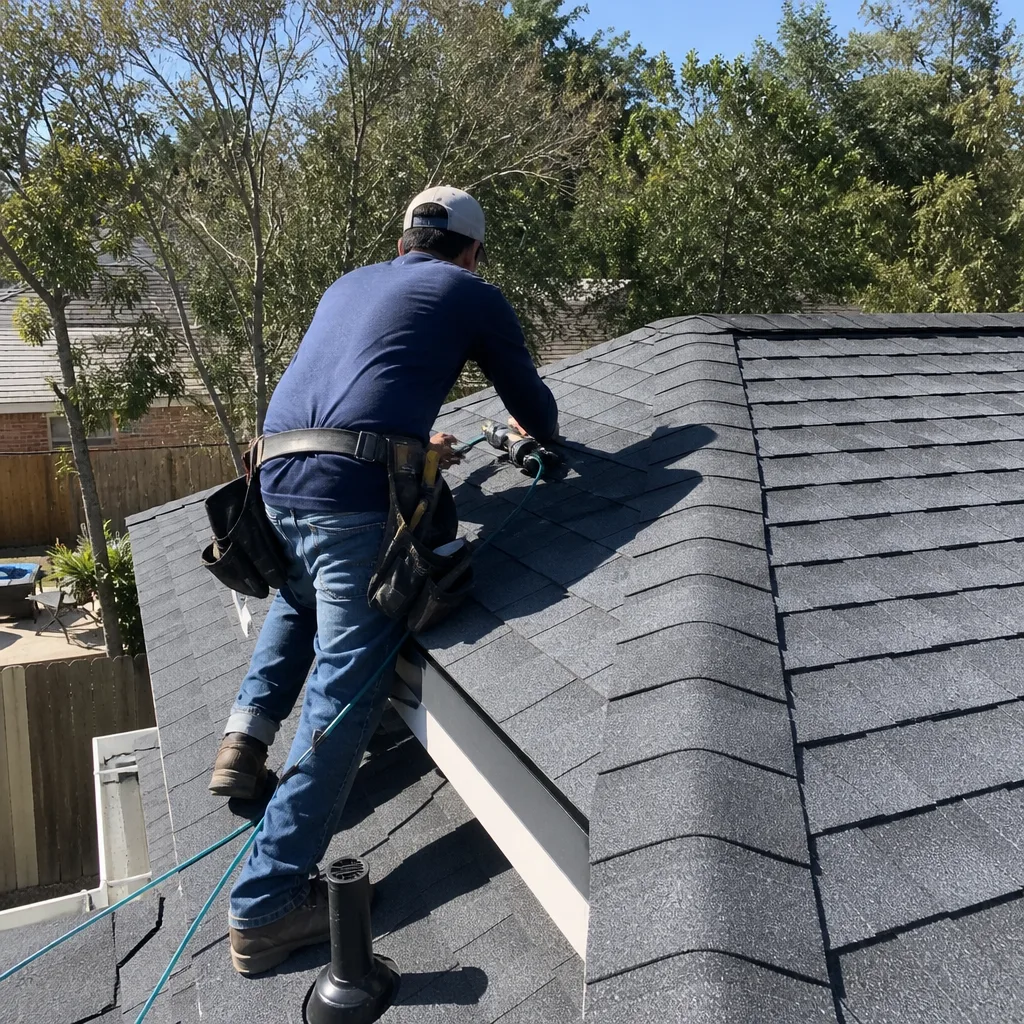
Most Jacksonville homes are done in four to six hours from arrival to cleanup. We remove the old vent and damaged cap shingles, inspect and correct the slot if needed, install the new IKO-compatible vent with end caps and sealant, and replace cap shingles to match your existing roof color as closely as the shingle line allows.
We keep IKO-compatible ridge vent rolls and panels on our trucks, along with end caps, connectors, and cap shingle stock in the most common Jacksonville color blends. If your roof has an uncommon shingle color or a ridge length beyond what a standard truck carries, we’ll source the match same week and put the date on paper before we start.
We install ridge vent systems from GAF, Owens Corning, and CertainTeed as well, and we’ll match whatever shingle manufacturer you have on the roof. The vent and the shingles work as a system, and matching the manufacturer profile is the difference between a vent that performs and one that only looks right from the street.
Written by Travis Oakley, Owner, Brennan Roofing Co Jacksonville at Brennan Roofing Co Jacksonville, serving Jacksonville and nearby areas.