
Last updated October 17, 2026
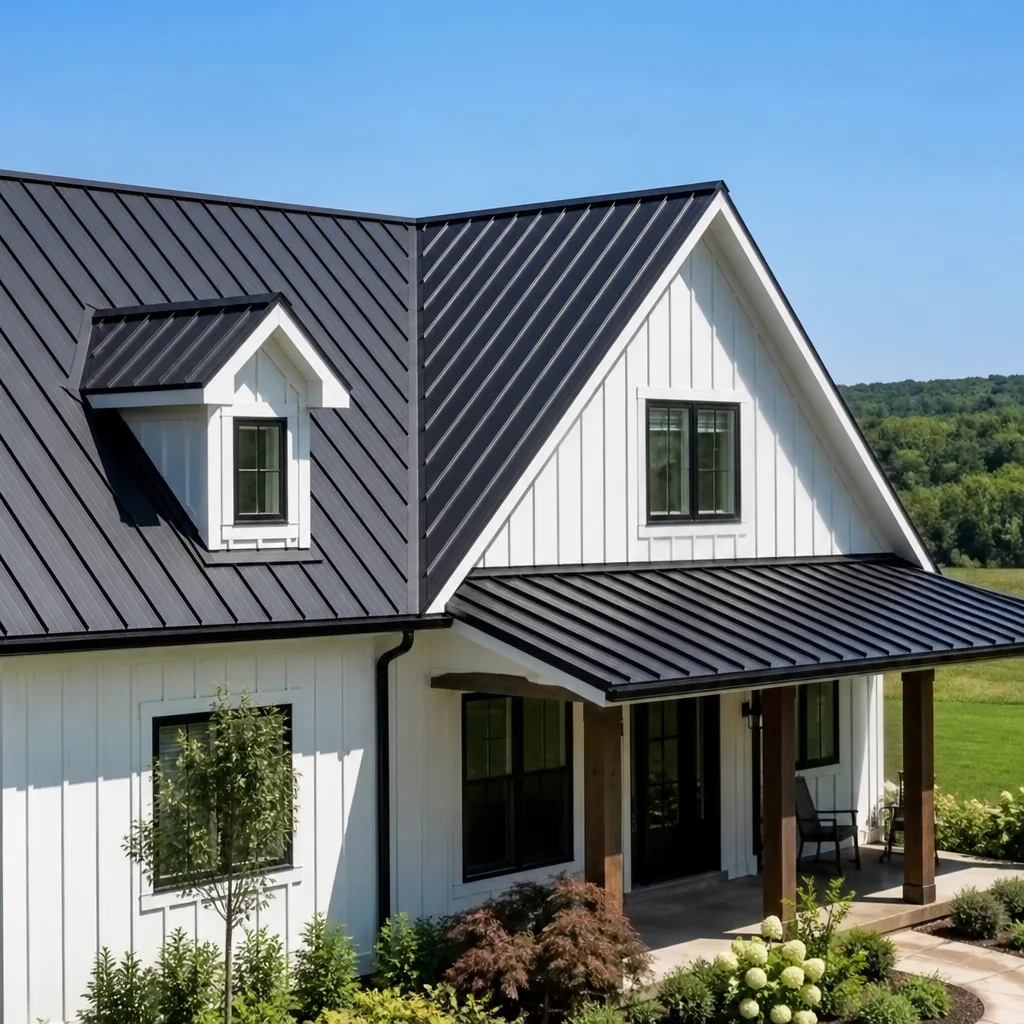 Metal roofing
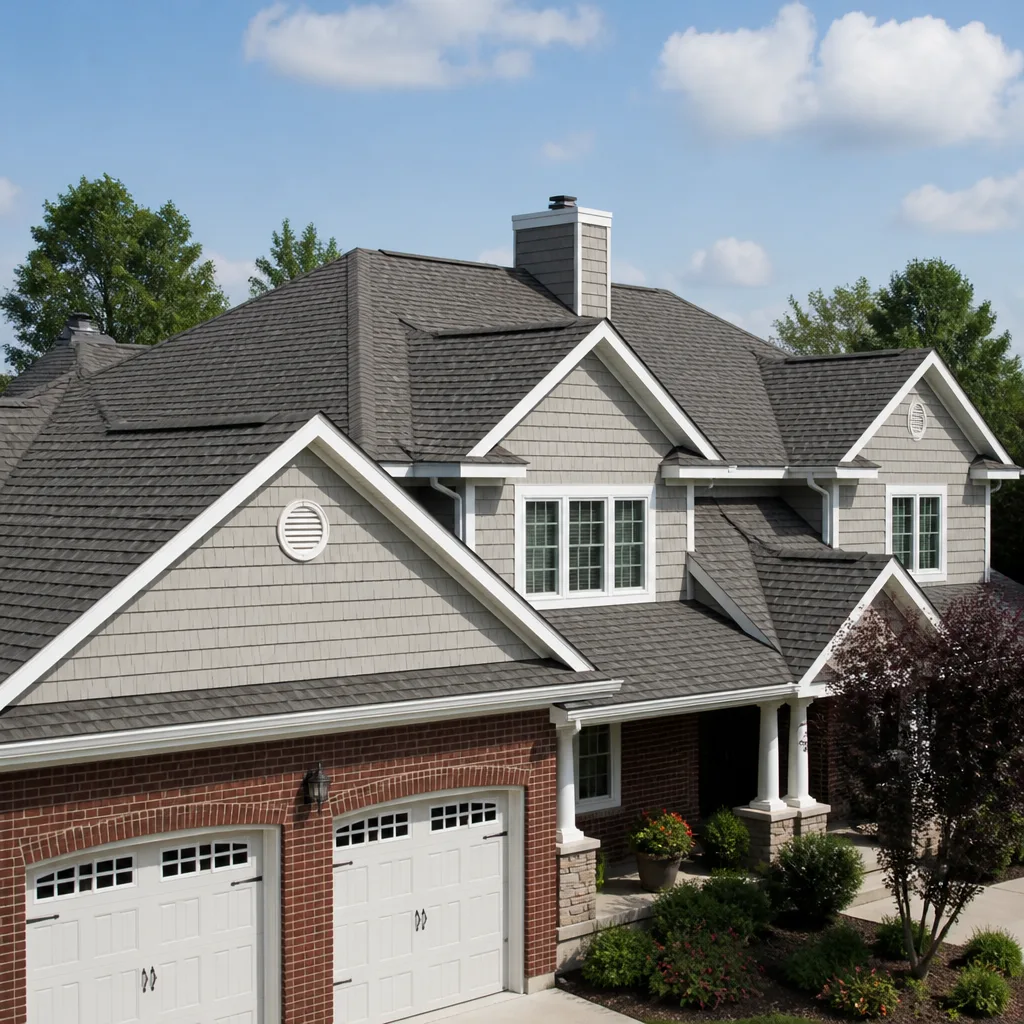 Architectural shingles
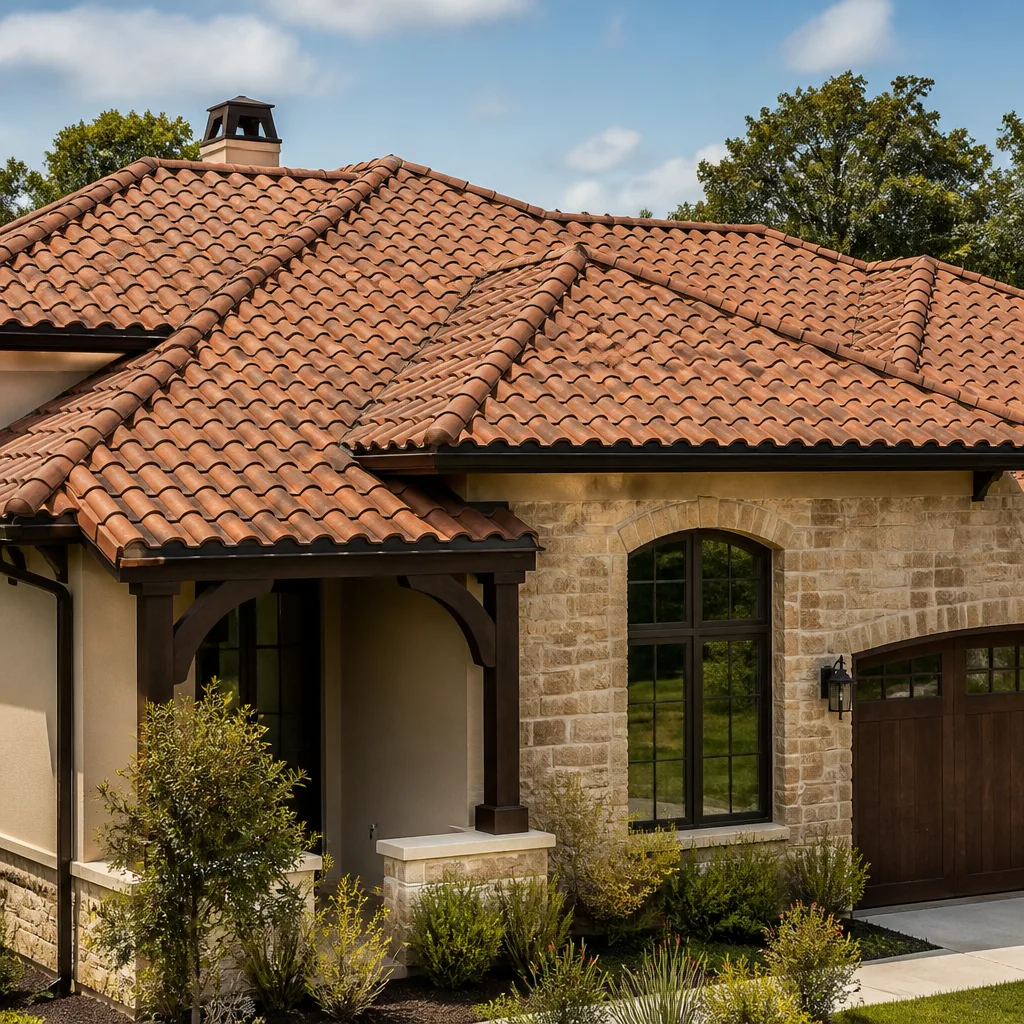 Tile roofing
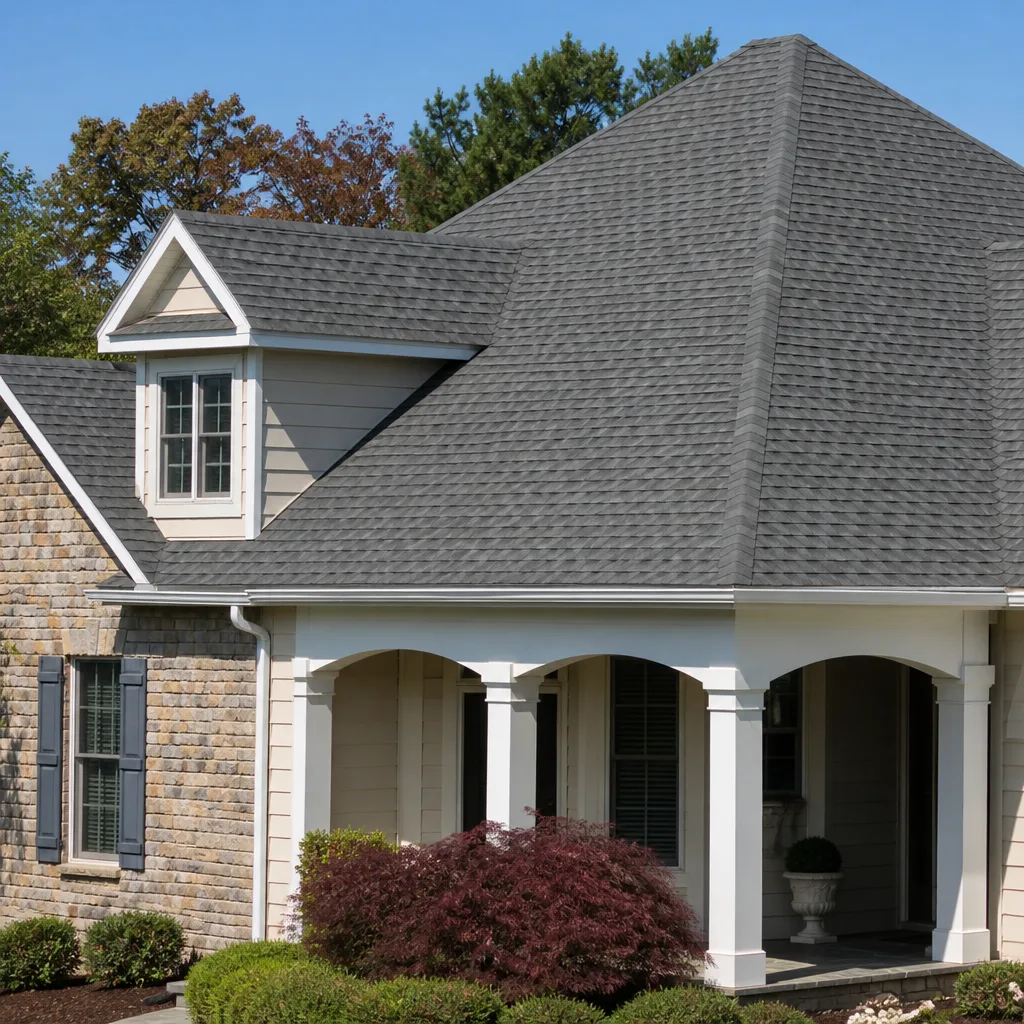 GAF
GAF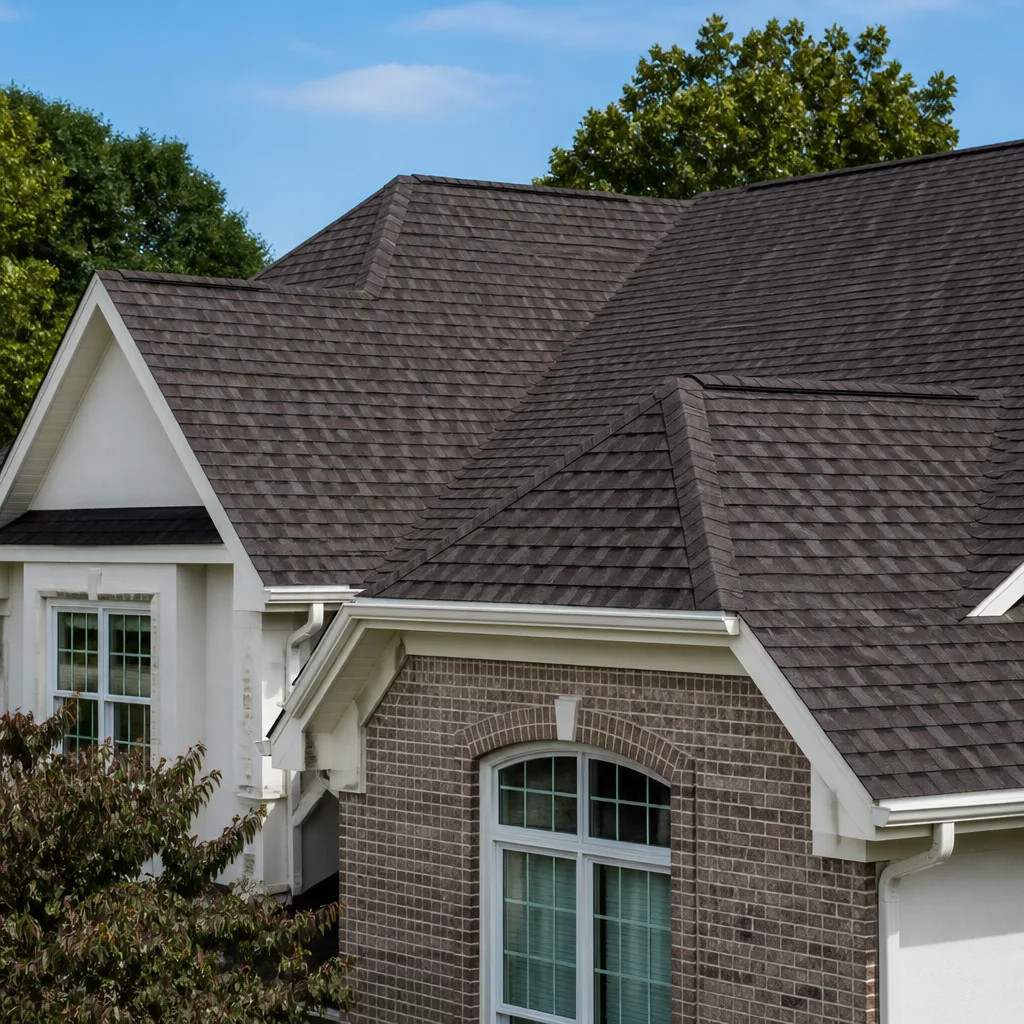 Owens Corning
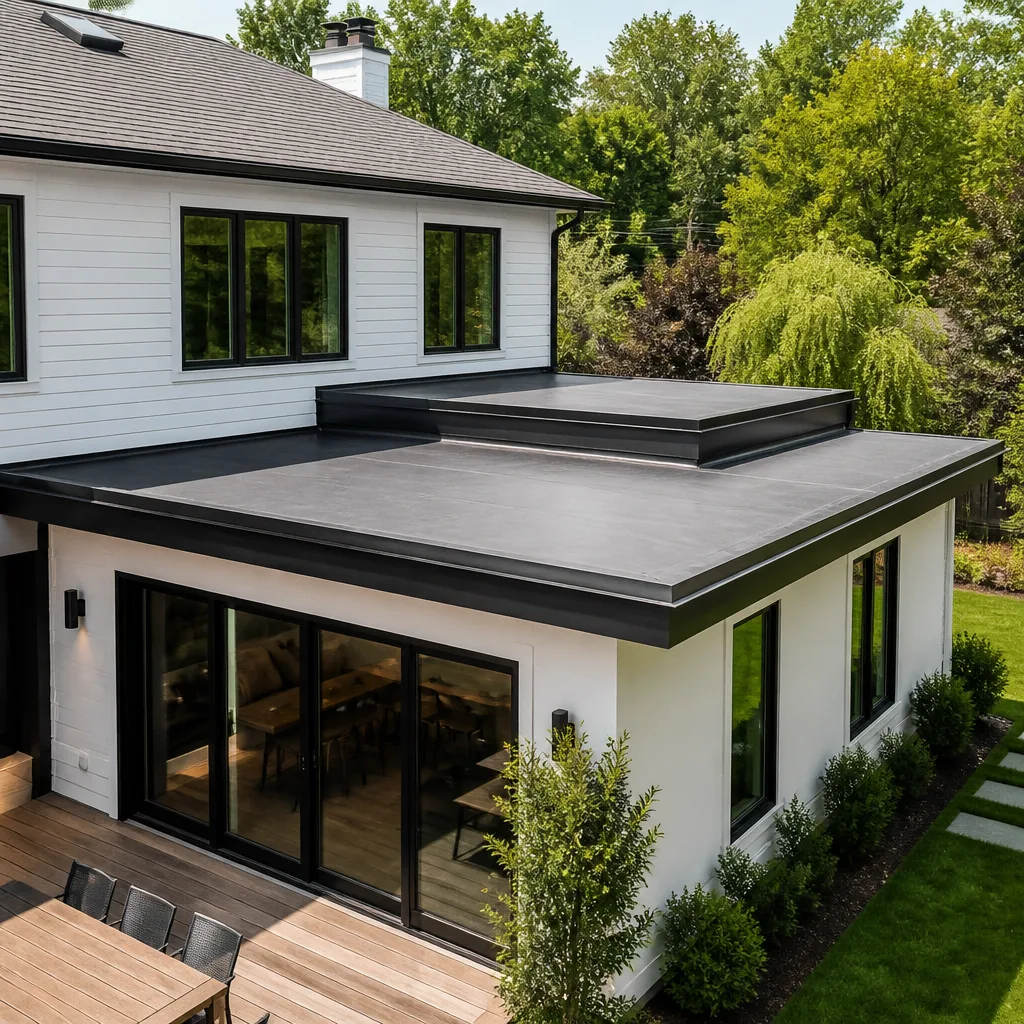 Flat & low-slope
Free roof inspection with deck photos before we talk money - GAF and Owens Corning certified installation
Roofing Cost Breakdown: The Jacksonville Homeowner’s Reference for 2026
Walk through any Arlington or Mandarin neighborhood and you’ll see three identical ranch houses with three very different roofs. One cost $11,000. One cost $16,000. One cost $19,500. Same square footage, same pitch, same year. The difference wasn’t quality. It was information. The homeowner who paid $11,000 didn’t know what was missing from the quote. The homeowner who paid $19,500 didn’t know what the other two left out. This guide puts real 2026 Jacksonville numbers on the page, line by line, so you can evaluate a roofing quote instead of guessing at it. For Roofing Warning Signs: A Jacksonville Homeowner’s Reference Guide, see our earlier coverage.
Styles & brands we work with
Quick Answer
A full roof replacement in Jacksonville FL in 2026 costs between $8,100 and $14,400 for a typical 1,800 sq ft home with architectural shingles, installed. That works out to $6.50 to $9.00 per square foot of roof area, with 3-tab asphalt running lower ($4.50 to $6.50 per sq ft) and standing seam metal running significantly higher ($14 to $19 per sq ft). The single biggest variable is not the shingle brand. It’s what the contractor includes, excludes, and writes down.
Table of Contents
- Jacksonville Roofing Prices in 2026: The Three Numbers That Matter
- What a Legitimate Roofing Quote Includes, Line by Line
- The Hidden Costs That Blow Jacksonville Roofing Budgets
- How to Calculate Your Own Rough Estimate Before Calling Anyone
- Fixed-Price Contracts vs. Estimates: What the Language Actually Allows
- Material Choices: What Jacksonville Roofers Actually Install
- Jacksonville-Specific Factors: Climate, Code, and Market Pressure
- Common Mistakes to Avoid
- When to Call a Professional
- Frequently Asked Questions
- The Bottom Line
Jacksonville Roofing Prices in 2026: The Three Numbers That Matter
We’ll start with the numbers because that’s what you came here for. These are installed prices for a complete tear-off and replacement on a typical single-family home in Jacksonville, including labor, materials, disposal, and standard permit fees. They reflect what we see across Duval County in 2026.
3-tab asphalt shingles: $4.50 to $6.50 per square foot installed. On a 1,800 sq ft roof, that’s $8,100 to $11,700. 3-tab is the entry-level option. It’s a thinner, single-layer shingle with a flat appearance. It lasts 15 to 20 years in Jacksonville’s sun and storms. You’ll see these on rental properties, starter homes, and budget repairs.
Architectural (dimensional) shingles: $6.50 to $9.00 per square foot installed. On that same 1,800 sq ft roof, that’s $11,700 to $16,200. Architectural shingles are thicker, layered, and carry a 30-year to lifetime manufacturer warranty. This is what goes on roughly 75% of Jacksonville homes we inspect. It’s the default middle ground and usually the right choice for most homeowners.
Standing seam metal: $14 to $19 per square foot installed. On 1,800 sq ft, that’s $25,200 to $34,200. Metal roofing is a 40 to 50-year product that handles Jacksonville’s hurricane season better than any asphalt product. It costs more upfront because the material is more expensive and the installation requires a different skillset. In coastal areas like Atlantic Beach and Neptune Beach, metal is increasingly common because insurance companies discount it.
Those three ranges are the conversation starter. But here’s what competitors don’t tell you: two quotes for architectural shingles on the same house can still differ by $4,000 to $6,000. The shingles are not the reason. The reason is everything else on the quote, and whether it’s there at all.
What a Legitimate Roofing Quote Includes, Line by Line
Most Jacksonville homeowners compare roofing quotes by looking at the bottom line. That’s like buying a car by comparing lease payments without reading what’s in the lease. A legitimate roofing quote is a document. Every line should be there for a reason. Here’s what a complete quote from a professional roofing company in Jacksonville includes, and what each line means.
Tear-off and disposal: $2,000 to $3,500 for a typical home. This covers removing the existing roof down to the decking, hauling away the old shingles, underlayment, and fasteners, and a magnet sweep of the yard to catch stray nails. Some contractors quote tear-off separately. Some bundle it. If it’s absent from the quote, the contractor is either planning to leave the old roof on (a code violation in most of Duval County) or planning to add it as a ‘change order’ later.
Underlayment: $0.40 to $0.75 per square foot. This is the water-resistant barrier between the decking and the shingles. Florida building code requires a specific grade. Cheaper quotes often use a lower-grade felt or synthetic product. Ask what type and grade is specified. In Jacksonville’s humid climate, underlayment quality matters more than in drier markets because a small leak becomes a mold problem faster.
Drip edge: $250 to $600 total for a typical home. Drip edge is the metal strip along the roof’s edge that directs water away from the fascia board. It’s required by Florida code. Some contractors skip it or don’t mention it. When water runs behind the gutter and rots the fascia, you’ll find out it wasn’t there.
Flashing replacement: $500 to $1,200 depending on roof complexity. Flashing is the metal used around chimneys, skylights, roof valleys, and any place the roof meets a wall. A proper roof replacement includes new flashing, not reused flashing. Reused flashing is a leak waiting to happen. If the quote says ‘reuse existing flashing’ or doesn’t mention flashing at all, ask why.
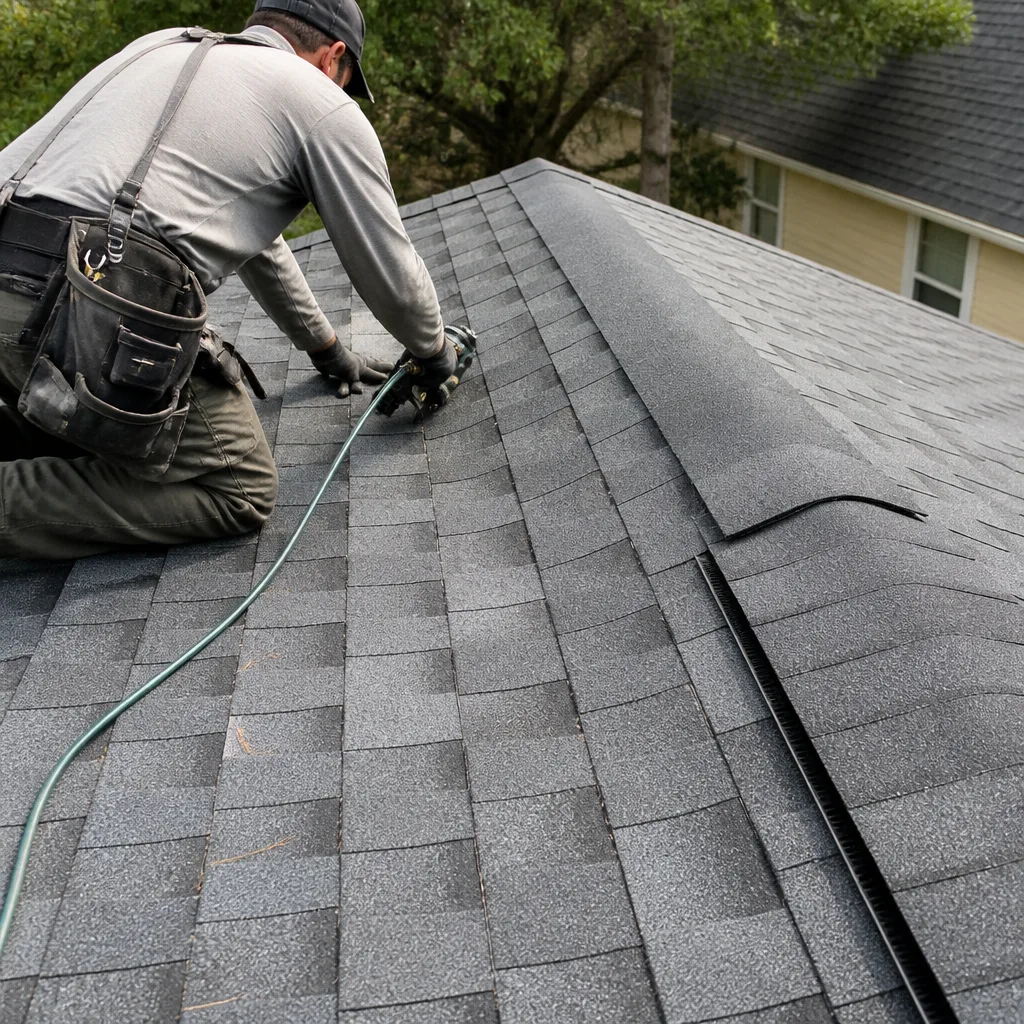
Ridge cap: $300 to $600. The ridge cap covers the peak of the roof. It’s not regular shingles cut to fit. It’s a dedicated product designed for the angle and exposure. A proper replacement includes new ridge cap shingles.
Permit fee: $150 to $400 in Jacksonville. Duval County requires a permit for roof replacement. The fee is based on the job’s value. A contractor who says permits aren’t necessary is either unlicensed or planning to do the work without inspection, which creates problems when you sell the house or file an insurance claim.
What’s the quote hiding when lines are bundled or absent? It’s hiding the ability for the contractor to shift money around. A quote that says ‘complete roof replacement: $12,500’ with no breakdown gives you nothing to hold the contractor to. A quote that lists each component gives you a document you can compare against the next quote, line by line. At Brennan Roofing Co Jacksonville home, we put every price on paper before work starts. Not because it’s easier. Because it’s the only way the number means anything.
The Hidden Costs That Blow Jacksonville Roofing Budgets
Every roofer in Jacksonville has seen the same look on a homeowner’s face when the bill goes up mid-job. “The decking was rotten. We had to replace it.” That sentence costs $1,500 to $3,000 on a typical home. The homeowner never saw it coming because the quote didn’t prepare them for it. Here are the three hidden costs that blow roofing budgets, what they cost in 2026, and how a legitimate quote handles them.
Decking replacement: $2 to $4 per sheet, typically 5 to 20 sheets. The decking is the plywood or OSB underneath the shingles. When the old roof leaks or Jacksonville’s humidity gets into the decking, it rots. It doesn’t show itself until the shingles come off. No contractor knows on day one whether the decking needs replacement. But a legitimate quote includes a per-sheet price upfront, so the homeowner knows exactly what to expect if replacement is needed. Most homes need 3 to 6 sheets replaced. Older homes in Riverside and Avondale, where roofs may be 25 years old, often need 15 to 20.
Code-required ventilation upgrades: $300 to $800. Florida building code has specific ventilation requirements for attics and roof assemblies. An older Jacksonville home often doesn’t meet the current standard. When the roof gets replaced, the code requires the contractor to bring ventilation up to current code. This means adding ridge vents, soffit vents, or attic fans. A contractor who doesn’t mention this will file for the permit, get a code review, and then tell you mid-job that the inspector says ventilation must be upgraded. The price goes up. You have no choice. It’s code.
Permit inspection fees: $50 to $200 per inspection beyond the base permit. The building permit is one fee. The inspection is another. Most roof replacements require two inspections: one after tear-off, when the underlayment is down and the decking is visible, and one after installation. Some contractors fold these fees into the permit line. Some bill them separately. Ask which is which before signing.
One more thing we see often: chimney and skylight work. If you have a chimney that needs tuckpointing or a skylight that needs a new seal, that is not included in a standard roof replacement. It’s additional work, and it should be a separate line on the quote, not a surprise at the end.
How to Calculate Your Own Rough Estimate Before Calling Anyone
You don’t need a contractor to tell you the square footage of your roof. You need a tape measure, basic math, and a phone. Walking into a roofing conversation with a rough number means you’ll know immediately whether a quote is reasonable or whether someone is testing you. Here’s the method we tell neighbors to use before they call us or anyone else.
Step 1: Measure the footprint. Measure the length and width of your house at ground level. Multiply them. If your house is 60 feet by 30 feet, your footprint is 1,800 square feet. This is the footprint area, not the roof area.
Step 2: Apply the pitch multiplier. Your roof is sloped, so its actual surface area is larger than the footprint. The multiplier depends on the pitch (steepness). A low-pitch roof (4/12 or less) has a multiplier of 1.05 to 1.10. A moderate-pitch roof (5/12 to 7/12, common in Jacksonville ranch homes) has a multiplier of 1.10 to 1.20. A steep-pitch roof (8/12 or more, common in Mandarin and parts of the Southside) has a multiplier of 1.20 to 1.35. Take your footprint and multiply. For a 1,800 sq ft home with a moderate pitch: 1,800 x 1.15 = 2,070 sq ft of roof area.
Step 3: Add the waste factor. Roofing materials don’t install perfectly flush. There are cuts, overlaps, ridge lines, and valleys. Industry standard is 10% waste for a simple roof, 15% for a complex roof with multiple valleys and hips. Take your roof area and multiply. For our example: 2,070 x 1.10 = 2,277 sq ft. Round to 2,300.
Step 4: Multiply by the price per square foot. Take your adjusted roof area and multiply by the range for your chosen material. For architectural shingles at $6.50 to $9.00 per sq ft: 2,300 x $6.50 = $14,950. 2,300 x $9.00 = $20,700. Your realistic range is $14,950 to $20,700.
That’s a starting point, not a quote. It won’t account for your specific decking condition, ventilation needs, or roof complexity. But it means you can sit down with a quote and know whether the number is in the right universe. Most homeowners who call us have never done this math. The ones who have are better negotiators, better questioners, and better protected against a contractor who prices by what the market will bear.
Fixed-Price Contracts vs. Estimates: What the Language Actually Allows
Here’s a sentence most Jacksonville homeowners have never read: “This is an estimate and actual costs may vary.” If that sentence is on your roofing contract, the contractor can charge you more than the number you agreed to. Not because anything changed on the job. Because the paper says they can. This is the single biggest difference between a roofing quote that protects you and one that doesn’t.
A fixed-price contract states the work to be done and the price to do it. The price does not move unless you and the contractor agree in writing to a change. If the decking is rotten and needs replacement, the fixed-price contract includes a pre-agreed per-sheet rate. If the code inspector requires an additional vent, the fixed-price contract should either include a ventilation line item or specify how code-driven changes are priced. The point is: nothing surprises you.
An estimate is a guess. Legally, a contractor working under an estimate can bill you for actual labor and materials at the end of the job. In Florida, contractors who are not licensed or who choose to operate on estimates can add 10%, 20%, or more to the final bill, and the invoice is technically compliant with the document you signed. You’re not protected by anything.
What should a written, fixed-price contract guarantee? It should list the work scope in writing: tear-off, disposal, underlayment type and brand, drip edge, flashing replacement plan, ridge cap, shingle brand and type or metal panel gauge, and permit handling. It should state the total price. It should state what happens if decking replacement is needed, with a per-sheet price. It should state what is not included. And it should carry a workmanship guarantee, in writing, with a defined duration.
At Brennan Roofing, this is what we call The Garrison Standard. The price goes on paper before any work starts. It does not move at the door. The guarantee is in writing, covers one full year, and if a repair or installation fails within that year, we come back at no charge. That’s the 365-Day Done Right Promise. It’s not a marketing slogan. It’s a contract term.
Material Choices: What Jacksonville Roofers Actually Install
Every roofing supply house in Jacksonville carries dozens of shingle lines. Most contractors install two or three. Here are the material lines you’ll see on Jacksonville quotes in 2026, and what they mean in plain terms.
GAF is the most common line we see on Duval County roofs. Their Timberline architectural shingle is the default choice for many contractors because it’s widely available, carries a strong warranty, and handles Florida’s heat well. Owens Corning is the next most common. Their Duration line is known for its SureNail strip, which holds better in high wind. CertainTeed positions itself as a premium option, with thicker shingles and a higher price point. Most of the difference between these brands is warranty program structure and color availability. Under Florida sun, all three perform within a similar window of 25 to 35 years when installed correctly.
For homeowners trying to decide, the brand matters less than the install. A GAF Timberline shingle nailed wrong will fail faster than a generic shingle nailed right. When you’re comparing quotes, don’t ask “what brand do you use?” and stop there. Ask “what underlayment do you pair with it?” and “how do you handle flashing at the chimney?” Those answers tell you more about the roof you’re getting than the shingle brand does.
Jacksonville’s market also sees a growing share of metal roofing, especially in coastal neighborhoods where wind mitigation credits reduce insurance premiums. Metal is a different product category entirely: different underlayment requirements, different flashing details, different installation methods. It’s not an upsell. It’s a different roof. If a contractor recommends metal for your home, ask specifically about their metal installation experience and what underlayment system they use.
Jacksonville-Specific Factors: Climate, Code, and Market Pressure
Roofing is a local trade. The same shingle installed in Ohio and in Jacksonville faces different conditions, different code requirements, and different market forces. Here’s what we deal with in Jacksonville that roofers in other markets don’t.
Climate. Jacksonville averages 53 inches of rain per year and sits in the cone of Atlantic hurricane activity every summer. Heat is the quiet enemy. Roof surface temperatures on a August afternoon in Mandarin run 140 to 160 degrees. That heat degrades underlayment and sealant faster than in cooler climates. It’s why cheap underlayment is a worse idea in Jacksonville than almost anywhere else. It’s why we recommend against cutting corners on the vapor barrier in humid attic conditions.
Code. Florida Building Code governs roof replacement in Duval County. The code has specific requirements for underlayment grade, fastener pattern, drip edge, and ventilation. Homes built before 2002 often don’t meet current ventilation standards, which triggers the code-driven upgrade we covered earlier. If you own a historic home in Riverside, Avondale, or Springfield, you also have local historic district requirements that affect roof material and color choices. A roofer who does work in those neighborhoods should know those requirements and should mention them before you order materials.
Market pressure. Jacksonville’s roofing market is active in 2026. Material costs have stabilized from the 2021-2023 shortage spikes, but labor remains tight. The result is that pricing varies more than it did ten years ago. Some contractors price aggressive to keep crews busy. Some price high because they know demand is there. The homeowner’s protection in this market is the same as it’s always been: a written quote, line by line, with no blank spaces.
We’ve also seen the results of unlicensed work in Jacksonville. A roof replaced without a permit. A contractor who disappears after the first rainstorm. The homeowner calls us for a roof repair in Jacksonville, and we find that the entire installation has to be redone. It’s an expensive lesson. A licensed, permitted, inspected roof replacement costs more upfront and costs less over five years.
Common Mistakes to Avoid
- Picking the middle quote without reading it. The middle quote is not a safe choice. It’s just a number. Read the line items, the exclusions, and the contract language. The middle quote might be the worst of the three.
- Accepting a verbal price. If it’s not in writing, it doesn’t exist. A contractor who won’t put the price on paper before starting work isn’t a contractor you want on your roof.
- Ignoring the underlayment line. Shingles are visible. Underlayment is hidden. The wrong underlayment in Jacksonville’s humidity shortens a roof’s life by years and no one sees it coming.
- Skipping the permit. An unpermitted roof replacement creates problems at sale, at insurance renewal, and at the first inspection. The permit fee is small. The cost of not having one is not.
- Not asking about decking replacement upfront. The conversation should happen before the tear-off, not after. Ask for a per-sheet price in the contract.
- Choosing a contractor by speed. “We can start tomorrow” is not a qualification. In Jacksonville’s market, the good contractors have work scheduled. The ones who can start immediately either have no backlog or no reputation.
- Failing to verify license and insurance. Ask to see the state license and the certificate of insurance. It takes two minutes. It’s the difference between a legitimate roofer and a truck with a ladder.
When to Call a Professional
If you see water stains on the ceiling, missing shingles after a storm, or granules collecting in your gutters, don’t wait. A leaking roof in Jacksonville gets worse quickly because the humidity accelerates rot and mold growth in the attic. If you’re buying or selling a home, schedule a roof inspection in Jacksonville before the deal closes, so you know exactly what you’re inheriting. And if you’ve received a quote that seems high or low, call a second opinion. Brennan Roofing Co Jacksonville offers free estimates in Jacksonville and we’ll give you a written price before any work starts. Call (904) 719-6346.
Frequently Asked Questions
A roof replacement in Jacksonville FL in 2026 costs between $8,100 and $14,400 for a typical 1,800 sq ft home using architectural shingles, which works out to $6.50 to $9.00 per square foot of roof area. 3-tab asphalt runs $4.50 to $6.50 per sq ft, and standing seam metal runs $14 to $19 per sq ft. Call (904) 719-6346 for an exact quote based on your roof’s measurements and pitch, or browse more guides & resources. Estimates are free.
Quotes vary because contractors handle line items differently. Some include tear-off, underlayment, drip edge, flashing, ridge cap, and permit fees. Others bundle those costs into a single number or leave them out entirely, then add them as change orders once the job starts. The material cost is similar across contractors. The difference is what’s on paper. Ask for a line-by-line quote and compare the lines, not the total.
The price will change if the decking is rotted and needs replacement, or if code requires a ventilation upgrade that was not addressed in the original quote. A legitimate fixed-price contract includes a pre-agreed per-sheet rate for decking and specifies how code-driven changes are priced. If your contract says “estimate” and “actual costs may vary,” the contractor can legally charge you more. At Brennan Roofing, the price goes on paper before work starts and does not move at the door.
Yes. Duval County requires a building permit for roof replacement, and the work must pass inspection. The permit fee typically ranges from $150 to $400 depending on the job’s value. A contractor who suggests skipping the permit is creating problems for you later, especially at sale or insurance renewal. A professional roofing company in Jacksonville handles the permit as part of the job and lists the fee on the quote.
A typical single-family roof replacement in Jacksonville takes 1 to 3 days from tear-off through final inspection, depending on the size of the roof, its pitch, and the amount of decking replacement needed. Weather delays are common during Jacksonville’s summer storm season. The permitting and inspection process adds a few days to the overall timeline. Your contractor should give you a written schedule before work begins.
No. Brennan Roofing Co Jacksonville offers free estimates with a written price before any work starts. Every quote includes the full line-item breakdown: tear-off, underlayment, drip edge, flashing, ridge cap, and permit fee. The quote is backed by the 365-Day Done Right Promise, a written guarantee for one full year. Call (904) 719-6346 to schedule a free estimate.
The Bottom Line
Jacksonville roofing prices are not a mystery. They’re a range, and the range is knowable. A 1,800 sq ft home with architectural shingles should cost between $11,700 and $16,200, and the difference between the low and high end of that range is what’s on the paper. Get three quotes, but read them line by line. Ask about decking. Ask about underlayment. Ask if the price is fixed or estimated. The contractor who answers those questions clearly and puts everything in writing is the contractor who will still be standing behind the work a year later. The Garrison Standard exists because the industry doesn’t have one. We think Jacksonville homeowners deserve better, so we operate that way. If you’re ready for a roof quote you can actually read, call (904) 719-6346. The estimate is free. The price goes on paper before any work starts. And if it’s not done right, we make it right, in writing, for a full year.
Written by Travis Oakley, Owner at Brennan Roofing Co Jacksonville, serving Jacksonville since 2000.
See the difference
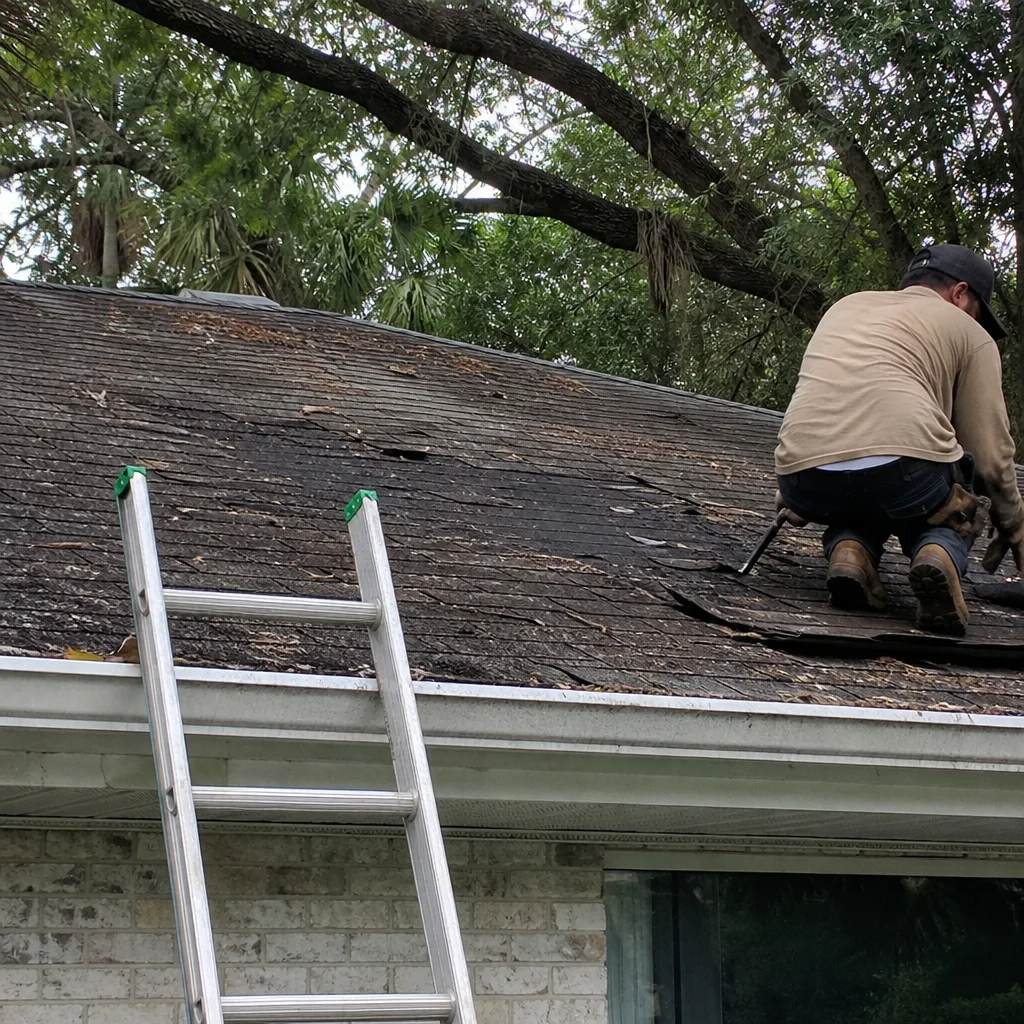 Before
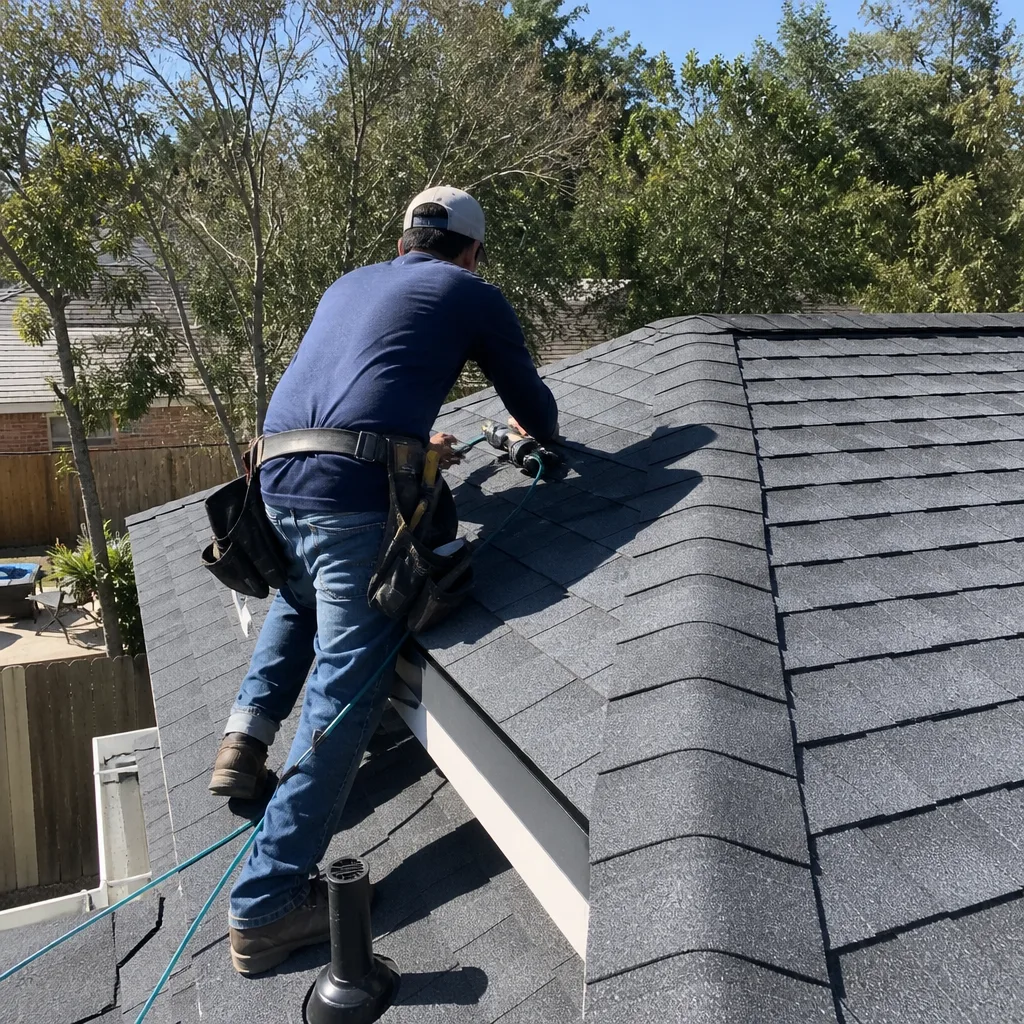 After
After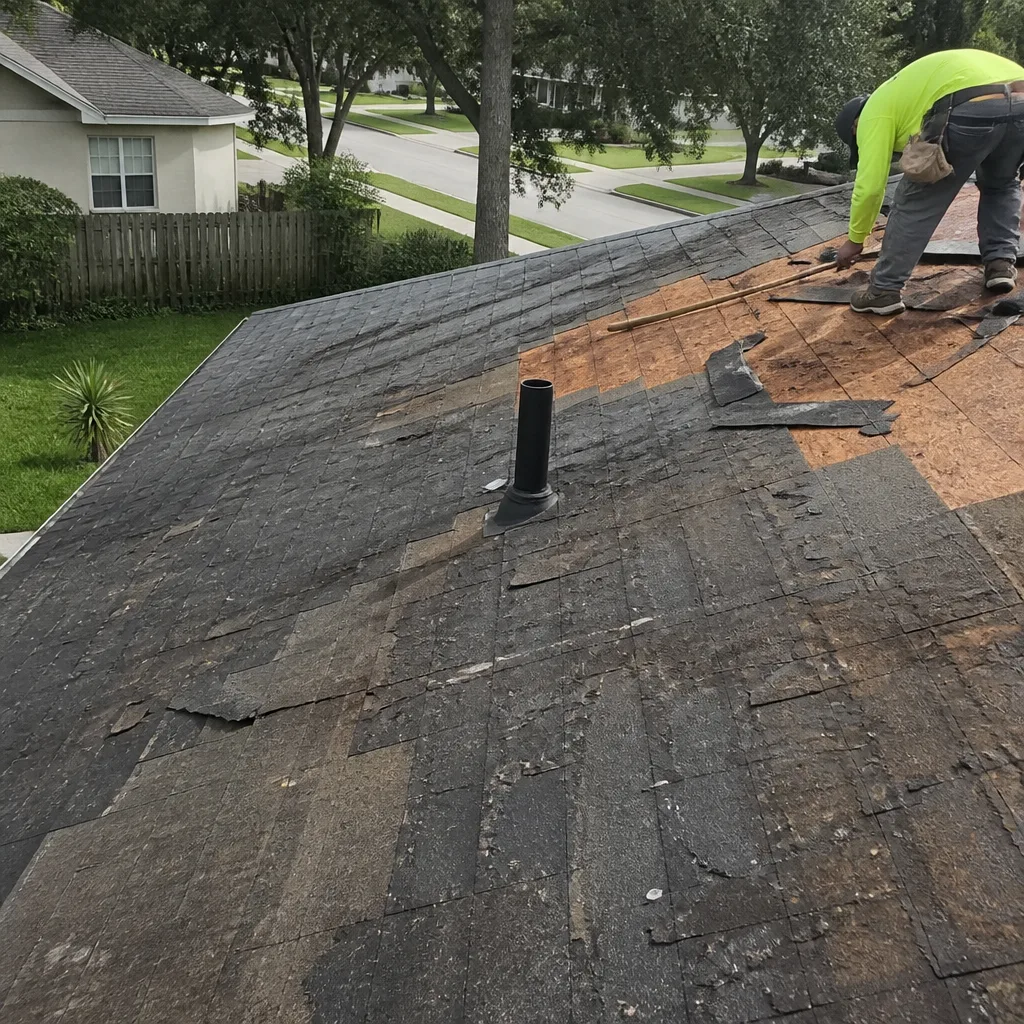 Before
 After
After Before
 After
After